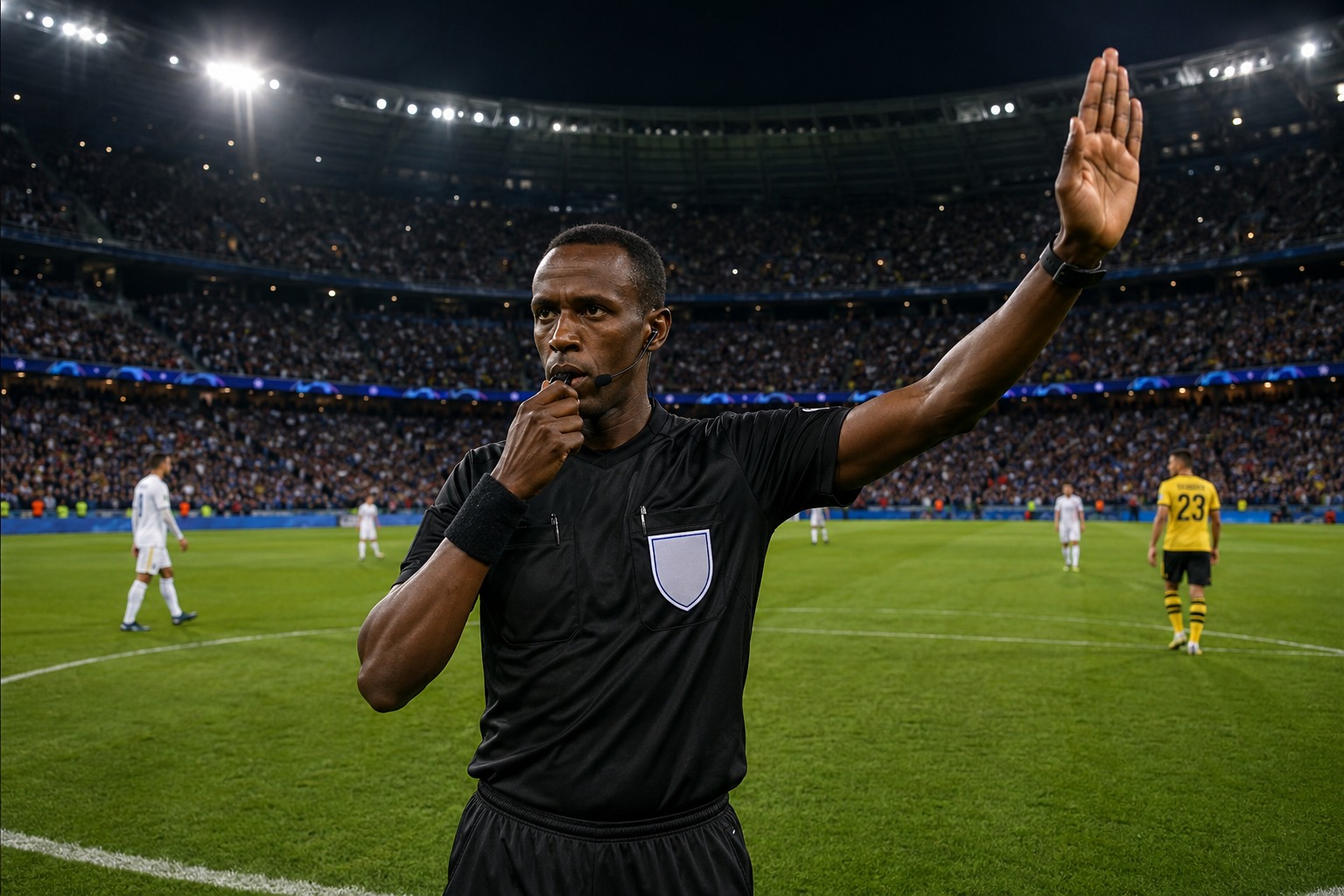
A referee who was turned away at a United States border just weeks ago has been handed one of the most prestigious assignments in world football. Omar Artan, a 34-year-old official from Somalia, will take charge of the UEFA Super Cup final between Paris Saint-Germain and Aston Villa on August 12 in Salzburg. The appointment comes after Artan was denied entry into the U.S., where he had traveled to officiate matches at the 2026 World Cup.
Barred at the Border
Artan flew to Miami earlier this month to join the international pool of World Cup match officials based in Florida. Instead of clearing customs and reporting for duty, he was detained and ultimately refused entry. U.S. Customs and Border Protection cited unspecified “vetting concerns” as the reason for sending him back. Within days, Artan was on a flight home to Somalia.
The rejection drew immediate attention. World Cup organizers and football’s global governing body faced questions about how a vetted, accredited match official could be blocked from entering a host nation. When Artan landed in Mogadishu, he was met not with embarrassment but with a hero’s welcome — crowds, cameras, and a national outpouring of support for a referee who had become an unexpected symbol of pride.
From Rejection to a European Final
Then the story turned. UEFA, the body that governs European football, announced that Artan would officiate its Super Cup final — the curtain-raiser that pits the winner of the Champions League against the winner of the Europa League. This year that means Paris Saint-Germain against Aston Villa, a marquee fixture watched by millions across the globe.
The selection carries historic weight. Artan will become the first African match official ever appointed to referee a major UEFA final. For a continent whose referees have long been underrepresented at the sport’s biggest European showcases, the moment is being celebrated as a breakthrough that goes well beyond one man’s redemption.
A Résumé That Speaks for Itself
Artan’s appointment is no sympathy pick. He was named the CAF Men’s Referee of the Year for 2025, the top individual honor for a match official on the African continent. The award recognizes consistency, composure, and command of the game’s biggest matches — exactly the qualities UEFA is betting on for its final.
The contrast is hard to miss. The same credentials that were deemed insufficient to clear a U.S. border were more than enough for European football’s governing body to trust Artan with one of its showcase events. One institution shut the door. The other handed him the whistle.
Reactions and the Debate
Supporters have framed the UEFA appointment as a fitting answer to a humiliating rejection — proof that talent and merit can rise above a closed border. Others have focused on the original “vetting concerns,” asking why two major institutions reached opposite conclusions about the same person, and whether the U.S. decision was ever adequately explained.
The episode also lands at a sensitive moment for the United States as a World Cup co-host. With dozens of matches set to be played on American soil, the handling of accredited officials and visiting delegations is under a brighter spotlight than usual. Artan’s case has become a touchstone in that larger conversation.
What This Means
For everyday fans, the story is a reminder that the people who enforce the rules of the world’s most popular game are subject to forces far beyond the pitch — immigration policy, international politics, and the scrutiny that comes with a global tournament. On August 12, none of that will be visible to viewers. They will simply see a referee at the center circle, raising his whistle to begin a final he was, just weeks earlier, told he could not enter the country to work.
Stay informed on the stories that matter most. Follow Palmedia News on Facebook and bookmark palmedianews.com for breaking news and analysis.