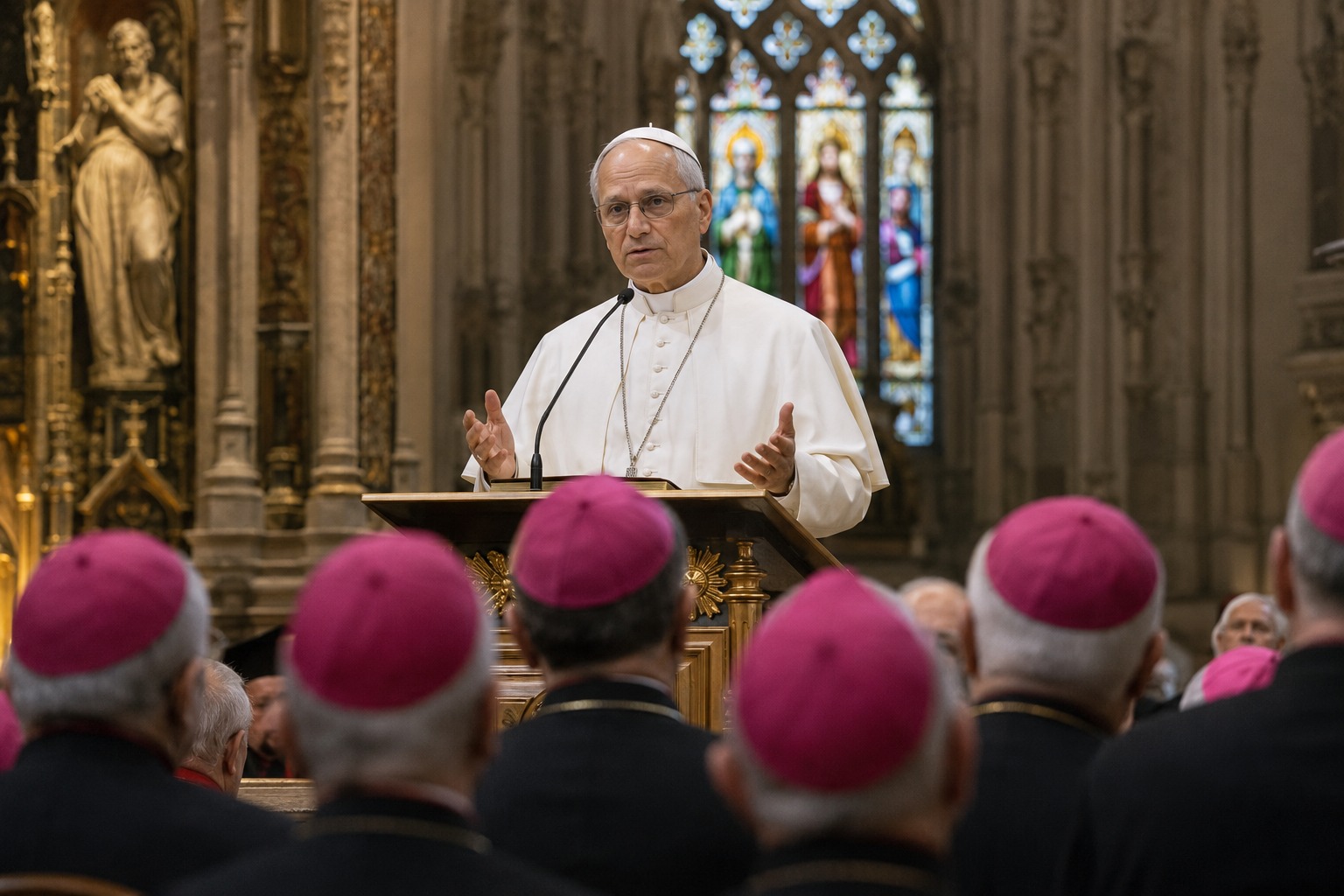
Pope Leo XIV has told Spain’s Catholic bishops they must offer reparations to survivors of clergy s*xual abuse and confront the scandal openly, marking one of the most direct interventions yet by the new pontiff on an issue that has shadowed the Church for decades. He delivered the message on Monday, the same day he met privately with six survivors in Madrid.
A Rare Face-to-Face Meeting
The meeting took place at the Vatican embassy in Madrid and lasted about an hour. Leo sat down with the six survivors, listened to their accounts, and told them he would weigh their suggestions for how the Church can improve its response to a crisis it spent years minimizing. For a sitting pope to meet survivors in person and signal openness to their proposals is unusual, and it set the tone for the harder message he would deliver to the country’s hierarchy.
To Spain’s bishops, Leo was blunt. He said the entire Church community needs an “ever more determined commitment to prevention and a culture of care,” and that the bishops must provide reparations to survivors and handle the crisis transparently. The implication was hard to miss: no more burying the problem and waiting for it to fade from public view.
Why This Matters
Spain’s Catholic hierarchy has only recently begun to reckon with its own legacy of abuse and cover-up. For years, Church leaders dismissed the severity of the scandal, even as cases mounted. That reckoning was forced largely by investigative reporting from the newspaper El Pais, which documented hundreds of allegations and pressed the Church to account for how it handled them.
Against that backdrop, a papal demand for reparations carries real weight. Reparations are not just symbolic — they imply financial responsibility, formal acknowledgment of harm, and a commitment to support survivors long after the headlines fade. For an institution that has often responded to abuse claims with silence or legal defensiveness, the call represents a meaningful shift in tone from the very top.
Not Everyone Is Convinced
The meeting drew sharp criticism from some advocates. Juan Cuatrecasas, a spokesperson for the Robbed Childhood association, argued that survivors are “being used by the church, by the bishops conference, to clean up the image of a Spanish church that has never been able to live up to its victims.” For critics like Cuatrecasas, a single high-profile meeting and a public statement are not the same as justice, accountability, or concrete compensation.
That tension — between a Church eager to show contrition and survivors who have heard apologies before — is at the heart of the story. The promise of reparations means little until it is backed by action: payments made, procedures changed, and independent oversight that survivors can trust. Whether Spain’s bishops follow through, or whether the moment becomes one more gesture that fades, remains an open question.
What It Means Going Forward
Leo’s early handling of the abuse crisis is being watched closely well beyond Spain. As a new pope still defining his papacy, how he balances institutional protection with genuine accountability could shape the Church’s credibility on the issue for years. A demand for reparations delivered directly to a national hierarchy sets a precedent other bishops’ conferences may be measured against.
For ordinary Catholics — in Spain and around the world — the question is whether their Church can finally match words with deeds on a scandal that has eroded trust for a generation. The survivors who sat across from the pope this week will be among the first to know whether anything actually changes.
Stay informed on the stories that matter most. Follow Palmedia News on Facebook and bookmark palmedianews.com for breaking news and analysis.