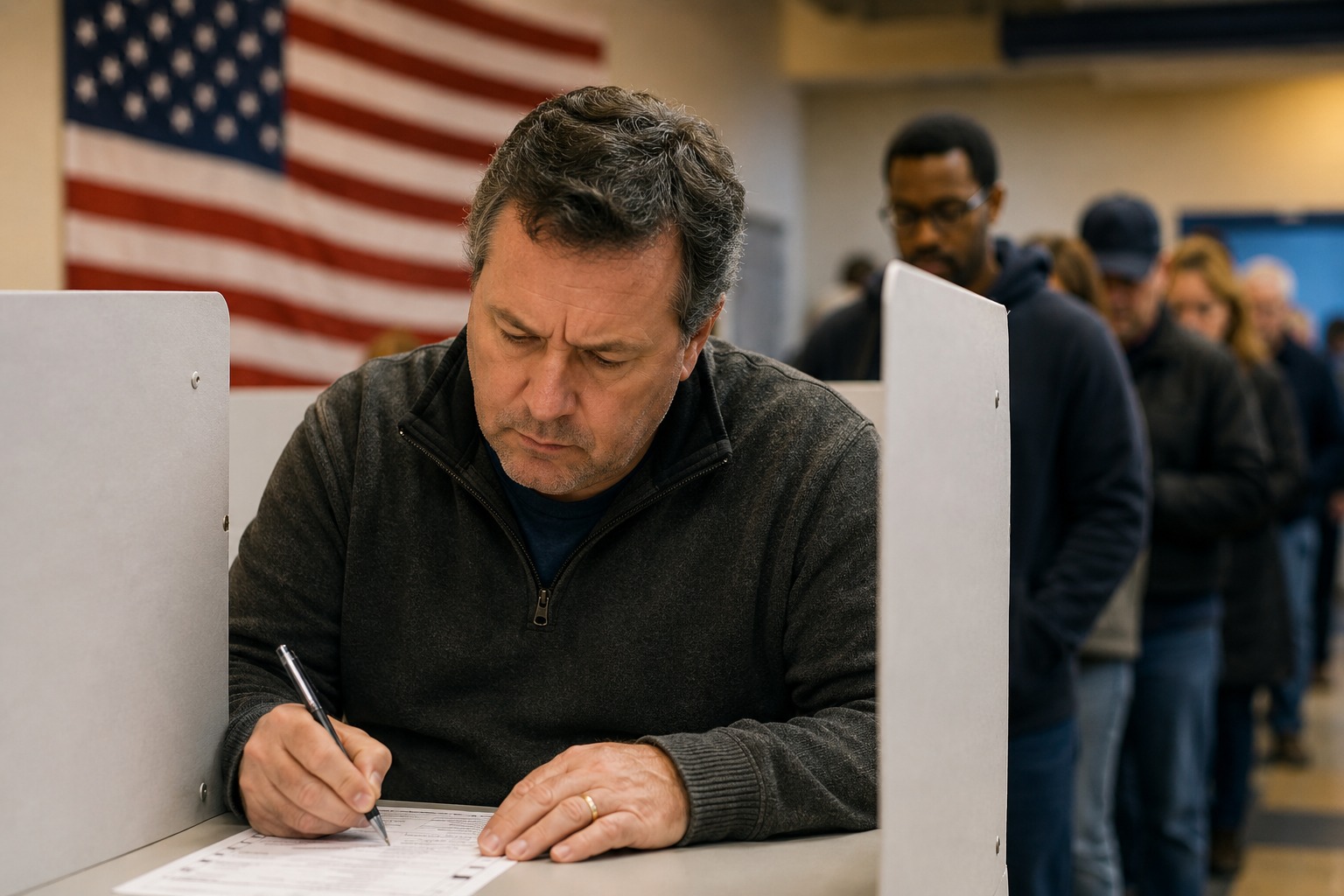
A new Reuters/Ipsos poll has quantified what many Americans already sensed about the country’s politics: most voters will stick with their party’s candidate even when that candidate is dragged through scandal. The survey, a six-day poll completed Monday, found that party loyalty now routinely outweighs concerns about a candidate’s character or conduct.
Party Over Purity
The headline finding is striking. Two-thirds of party-aligned respondents said they sometimes have to vote for a candidate they personally dislike, simply to keep the opposing party from gaining power. In other words, for a large share of the electorate, the calculation is no longer about who the best candidate is — it is about which team wins.
That dynamic helps explain a pattern that has frustrated reformers and good-government advocates for years: candidates who would once have been sunk by a major controversy increasingly survive, because their base treats a vote against them as a vote for the other side.
The Test Cases
The pollsters did not test the idea in the abstract. They tied it to real, active races. In Maine, Democrat Graham Platner — an oyster farmer hoping to win a Senate primary — has faced scrutiny over a Nazi-style skull-and-crossbones tattoo. Yet among Democrats familiar with him, just 17% said the tattoo would actually stop them from voting for him if they could cast a ballot in Maine’s election.
The same forgiveness showed up on the Republican side. Loyalty held firm around Texas figure Ken Paxton, who has weathered a fraud indictment. The poll suggests voters across the spectrum are far more willing to forgive trouble inside their own ranks than to punish it — a mirror-image tolerance that cuts across party lines.
That Maine primary is more than a local contest. The seat is viewed as crucial to Democrats’ hopes of winning a Senate majority in November, which is part of why the question of whether voters will overlook a candidate’s baggage carries national stakes.
Why Loyalty Is Winning
Pollsters and political observers have tracked this hardening of partisan identity for more than a decade. As the two parties have sorted more cleanly along ideological and cultural lines, the perceived cost of “crossing over” or staying home has risen. When voters believe the other side represents an existential threat to their values, individual scandals start to look like a price worth paying.
The result is an electorate that increasingly votes defensively. The poll’s two-thirds figure — voters backing candidates they don’t even like — is the clearest measure yet of how widespread that defensive posture has become.
What This Means for Americans
For everyday voters, the findings cut two ways. Supporters of party-line voting call it pragmatic: in a closely divided country, every seat matters, and refusing to vote for an imperfect candidate can hand power to the other side. Critics counter that this is exactly how flawed or scandal-plagued candidates keep advancing — because accountability disappears the moment a contest becomes a team sport. Either way, the poll suggests that for the foreseeable future, the surest path to surviving a scandal may simply be to have the right letter next to your name.
Stay informed on the stories that matter most. Follow Palmedia News on Facebook and bookmark palmedianews.com for breaking news and analysis.