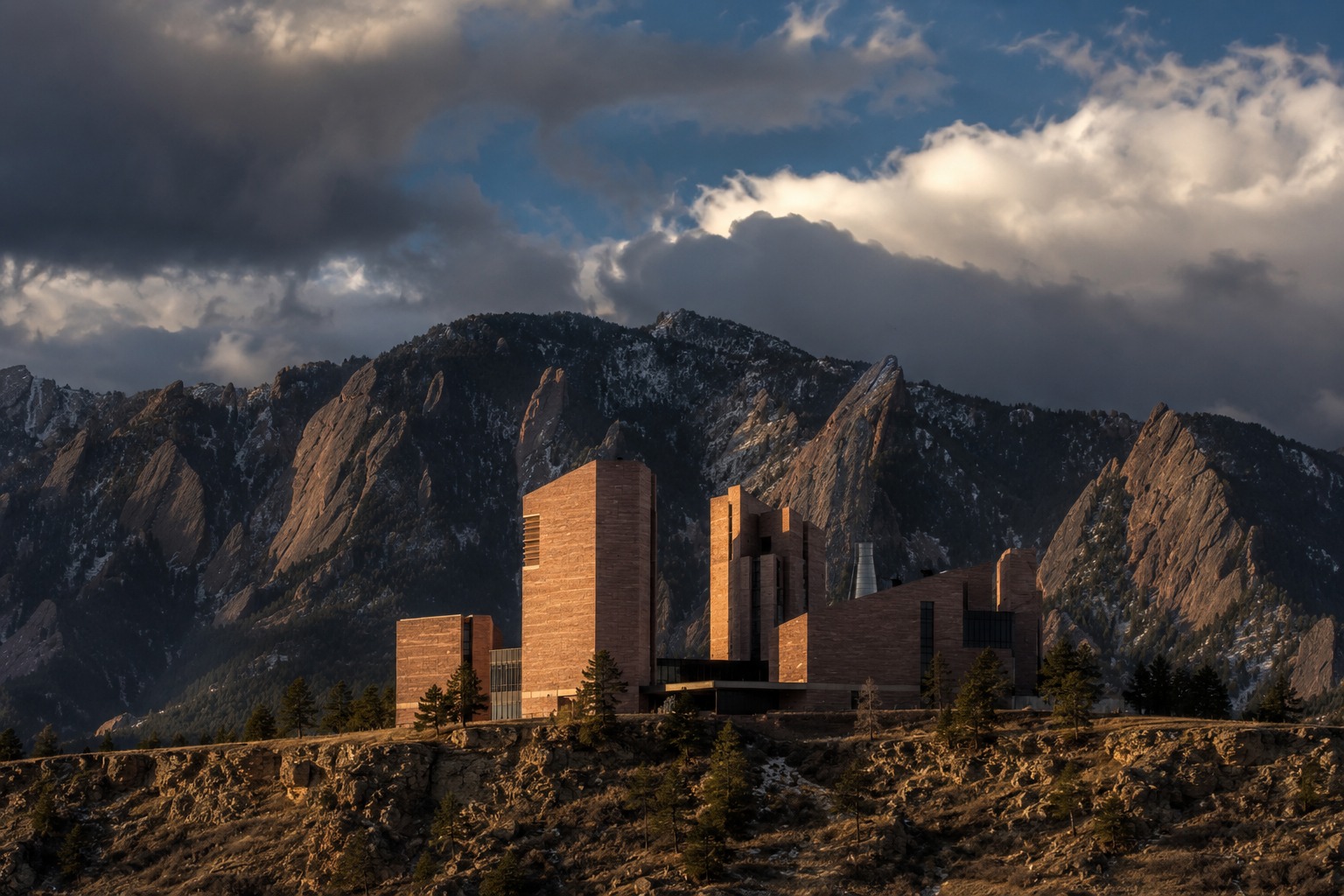
A federal judge has temporarily halted the Trump administration’s effort to break up the National Center for Atmospheric Research in Boulder, Colorado, delivering a sharp rebuke that pointed to evidence of political retaliation against the state. The ruling freezes a plan that critics warned could gut one of the country’s most important hubs for weather forecasting and climate science.
What the Judge Ordered
Colorado U.S. District Judge R. Brooke Jackson issued a temporary injunction blocking the dismantling of the National Center for Atmospheric Research, widely known as NCAR. The order specifically pauses a move that would have handed control of the NCAR-Wyoming Supercomputing Center to an outside operator. That facility, located in Cheyenne, Wyoming, is built to power the massive data processing behind modern climate and weather research.
Jackson found that the lawsuit challenging the breakup, brought by the nonprofit University Corporation for Atmospheric Research that oversees NCAR, was likely to succeed on its merits. That finding is a key legal threshold and signals the administration faces a steep climb defending the plan in court.
Why NCAR Matters
NCAR is not a minor government office. For decades, the Boulder-based center has been a cornerstone of American atmospheric science, producing the models and research that underpin everything from daily forecasts to hurricane tracking and long-range climate projections. The supercomputing power tied to the facility is used by scientists across the country and around the world.
Breaking up an institution of that scale would have ripple effects far beyond Colorado. Forecasters, researchers, universities, and even private companies that rely on the data have a stake in keeping the center intact. That is part of why the proposal drew immediate and intense opposition.
The Political Revenge Question
What made the ruling especially striking was the judge’s focus on the motivation behind the decision. Jackson pointed to evidence suggesting the move to break up NCAR was driven, at least in part, by political and personal animus rather than a clear-eyed analysis of facts and data.
According to the judge, no concrete action to dismantle the center materialized until after President Trump publicly clashed with Colorado Governor Jared Polis. The day after that confrontation, a top budget official announced the breakup of NCAR on social media. Jackson wrote that if the transfer was motivated even partly by political revenge rather than a genuine review of the relevant facts, the agency would have acted “arbitrarily and capriciously” — a legal standard that can doom government decisions in court.
Reactions on Both Sides
Supporters of the research center hailed the decision as a major victory for science and for the integrity of federal decision-making. They argue the ruling sends a message that agencies cannot reshape major institutions based on personal grievances or political feuds.
Critics of the administration went further, saying the judge’s findings confirmed what they had feared all along: that the breakup was payback aimed squarely at Colorado. Defenders of the plan have framed the reorganization as part of a broader push to restructure federal agencies, but the timing detailed in the ruling has fueled the retaliation narrative.
What This Means for Americans
For ordinary Americans, the stakes are practical. The forecasts that warn of dangerous storms, the climate models that inform planning, and the research that supports everything from agriculture to aviation all draw on the kind of work NCAR does. A fight over who controls that infrastructure is ultimately a fight over the reliability of the information millions of people depend on every day. For now, the lab stays intact, but the legal battle is far from over.
Stay informed on the stories that matter most. Follow Palmedia News on Facebook and bookmark palmedianews.com for breaking news and analysis.