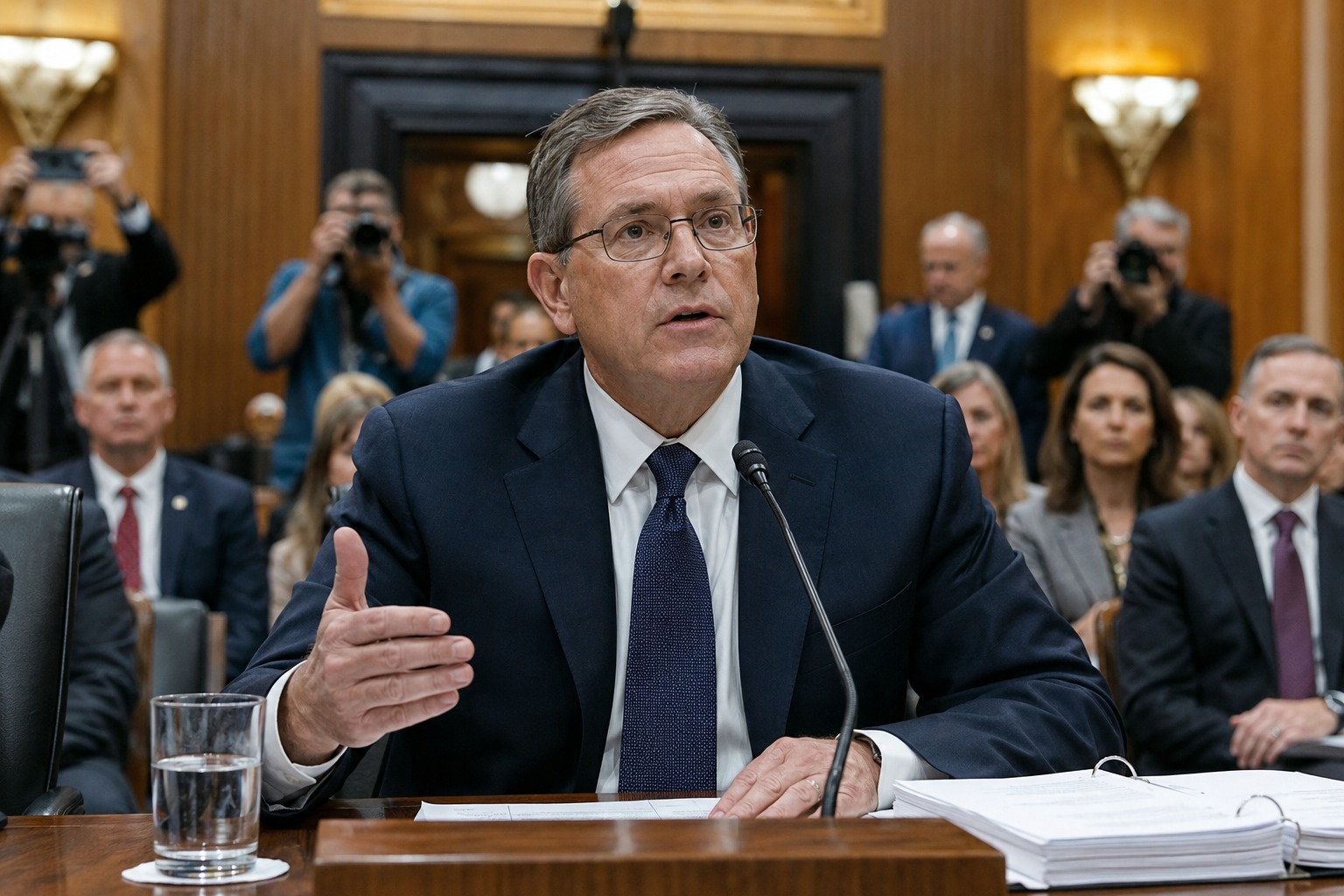
Acting Attorney General Todd Blanche told a House Appropriations subcommittee on Tuesday that the Trump administration will not move forward with its $1.776 billion “anti-weaponization fund.” Pressed by lawmakers on whether the reversal was permanent, Blanche left no room for doubt: “We are not moving forward with the fund. Period.”
The statement closes the door — at least rhetorically — on one of the most contentious financial arrangements to emerge from the Justice Department this year, a fund that drew rare bipartisan opposition almost from the moment it was announced.
How the Fund Came to Be
The anti-weaponization fund traced back to a settlement between the federal government and President Donald Trump. The Justice Department had agreed to voluntarily dismiss a $10 billion lawsuit Trump filed against the Internal Revenue Service. In place of that litigation, the department moved to establish a $1.776 billion fund framed as compensation for those who believed they had been targeted by a “weaponized” federal government.
That framing quickly became a problem. Critics across the political spectrum warned that the fund’s broad eligibility could allow individuals who participated in the January 6, 2021, attack on the U.S. Capitol to file for payouts. What was pitched as a remedy for government overreach instead looked, to many lawmakers, like an open-ended liability.
The Backlash That Forced a Retreat
The opposition was not confined to one party. Democrats objected on principle, but so did a significant number of Republicans — including allies of the president — who balked at the optics and the cost. The revolt grew large enough that Senate Majority Leader John Thune postponed action on a reconciliation bill that was meant to fund immigration enforcement, including money for Immigration and Customs Enforcement and Customs and Border Protection.
A federal judge had already issued a temporary injunction blocking the fund from making any payments. By the time Blanche appeared before the House panel, the administration had issued a Monday statement saying it would “abide” by that ruling. His testimony Tuesday went further, declaring the effort over entirely. When Rep. Grace Meng asked whether the department was done “ever,” Blanche answered simply: “Correct.”
What Stays in Place
Blanche stressed that the fund had never actually launched — no commissioners were appointed, no claims were filed, and no money changed hands. He also declined to put the reversal in writing, telling lawmakers there was “nothing to reverse,” though he acknowledged a hearing transcript would document his words.
The piece still drawing fire is a separate memo, signed by Blanche, that bars the IRS and prosecutors from reviewing Trump’s past tax returns. “Nothing has changed with that,” he said. Rep. Rosa DeLauro, the top Democrat on the committee, argued the memo amounts to roughly $100 million in tax relief for the president and his family — effectively immunity. Blanche rejected that characterization, saying that clearing past audits is “standard” and “typical” in any IRS settlement and does not shield anyone from future scrutiny.
What This Means for Americans
For taxpayers watching from the sidelines, the episode is a window into how federal money and legal settlements get negotiated at the highest levels — and how quickly a $1.8 billion plan can collapse under bipartisan pressure. The fund itself is gone, but the underlying questions about accountability, the tax memo, and the ongoing litigation in Washington and Florida are far from settled.
Stay informed on the stories that matter most. Follow Palmedia News on Facebook and bookmark palmedianews.com for breaking news and analysis.