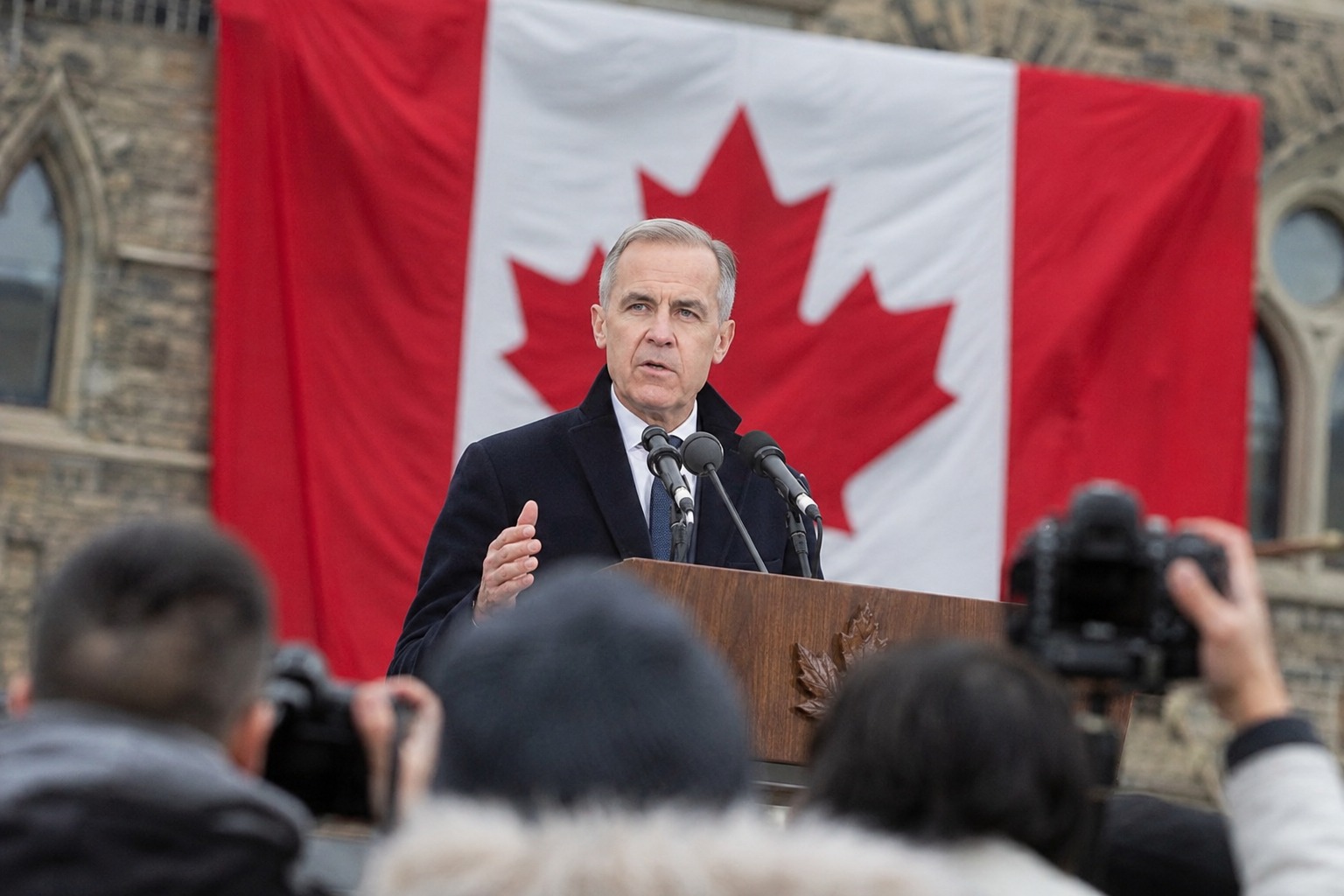
Canada unveiled retaliatory tariffs on roughly $20 billion worth of American goods on Tuesday, escalating a trade fight that has driven relations between the two neighbors to their worst point in decades. Finance Minister François-Philippe Champagne announced the measures in Ottawa alongside Industry Minister Mélanie Joly, Jobs Minister Patty Hajdu and Artificial Intelligence Minister Evan Solomon. The duties take effect September 8.
How It Fell Apart This Fast
The announcement caps a rapid collapse. Prime Minister Mark Carney walked away from trade negotiations with the Trump administration late Friday, saying U.S. negotiators had introduced last-minute demands Canada could not accept. That triggered President Donald Trump’s threatened 50% tariffs the following day on about $20 billion worth of Canadian goods.
Canada and the United States share one of the largest trading relationships on earth, with supply chains stitched together across autos, energy, agriculture and manufacturing. That integration is exactly what makes a prolonged fight expensive for workers and businesses on both sides of the border.
What Canada Is Taxing
Ottawa’s target list is deliberately pointed: U.S. steel, dairy, appliances, agricultural equipment, pulp and paper, and electronics, along with some products Washington had previously targeted in Canada.
Carney had signaled a strategic shift ahead of the announcement. Rather than continuing to match U.S. tariffs dollar for dollar, he said Canada may need to use more targeted retaliation aimed at protecting Canadian workers and businesses — hitting specific sectors rather than mirroring every American move.
Trump Escalates
On Monday, Trump wrote on social media that Canadian leaders should “fall in line” or face consequences “far WORSE” than the tariffs already in place. He also threatened new 50% tariffs on Canadian vehicles, auto parts and steel beginning next year, and said Canada “has been ripping off the United States of America for years,” criticizing what he called the country’s high tariffs on American farmers.
Trump has repeatedly referred to Canada’s prime minister as “Governor Carney,” a framing Ottawa has treated as more than a jab.
Carney: Washington Wanted to ‘Destroy Our Major Industries’
Carney did not soften his response. He said the U.S. trade demands showed Washington wanted to “destroy our major industries,” naming autos, steel and aluminum. “An attitude at the negotiation table that Canada is a subsidiary of the United States” is “not something we’re going to accept,” he said.
Carney said Washington had also sought language late in the talks that would have limited Canada’s ability to negotiate trade agreements with other countries without U.S. approval. He has called that demand a question of Canadian sovereignty. He was blunter in French, saying it was “a bad deal.”
Ontario Threatens Electricity and Critical Minerals
Ontario Premier Doug Ford went further, telling The Associated Press that “everything is on the table,” including cutting off electricity and critical minerals. “Up here, we’re at a fever pitch; everyone’s in for an economic war,” Ford said. Ontario has used power as leverage before, briefly imposing a 25% surcharge on electricity exported to Michigan, Minnesota and New York during an earlier phase of the dispute.
Ford is a Progressive Conservative and Carney is a Liberal, but the two have converged on the trade fight — a sign of broad political unity in Canada. U.S. Trade Representative Jamieson Greer countered that “the only reason Canada has auto production in the first place” was the 1960s Auto Pact.
What This Means for Americans
The auto sector sits at the center of this. Plants and suppliers in Ontario are tightly integrated with factories in Michigan and other states, with parts routinely crossing the border multiple times during production — so tariffs can hit the same component repeatedly and push up vehicle prices. American steel, dairy and appliance producers now face a shrinking Canadian market. And Ontario’s threats touch two things Washington watches closely: electricity flowing into northern states, and the critical minerals the Pentagon has been trying to secure outside of China.
Stay informed on the stories that matter most. Follow Palmedia News on Facebook and bookmark palmedianews.com for breaking news and analysis.