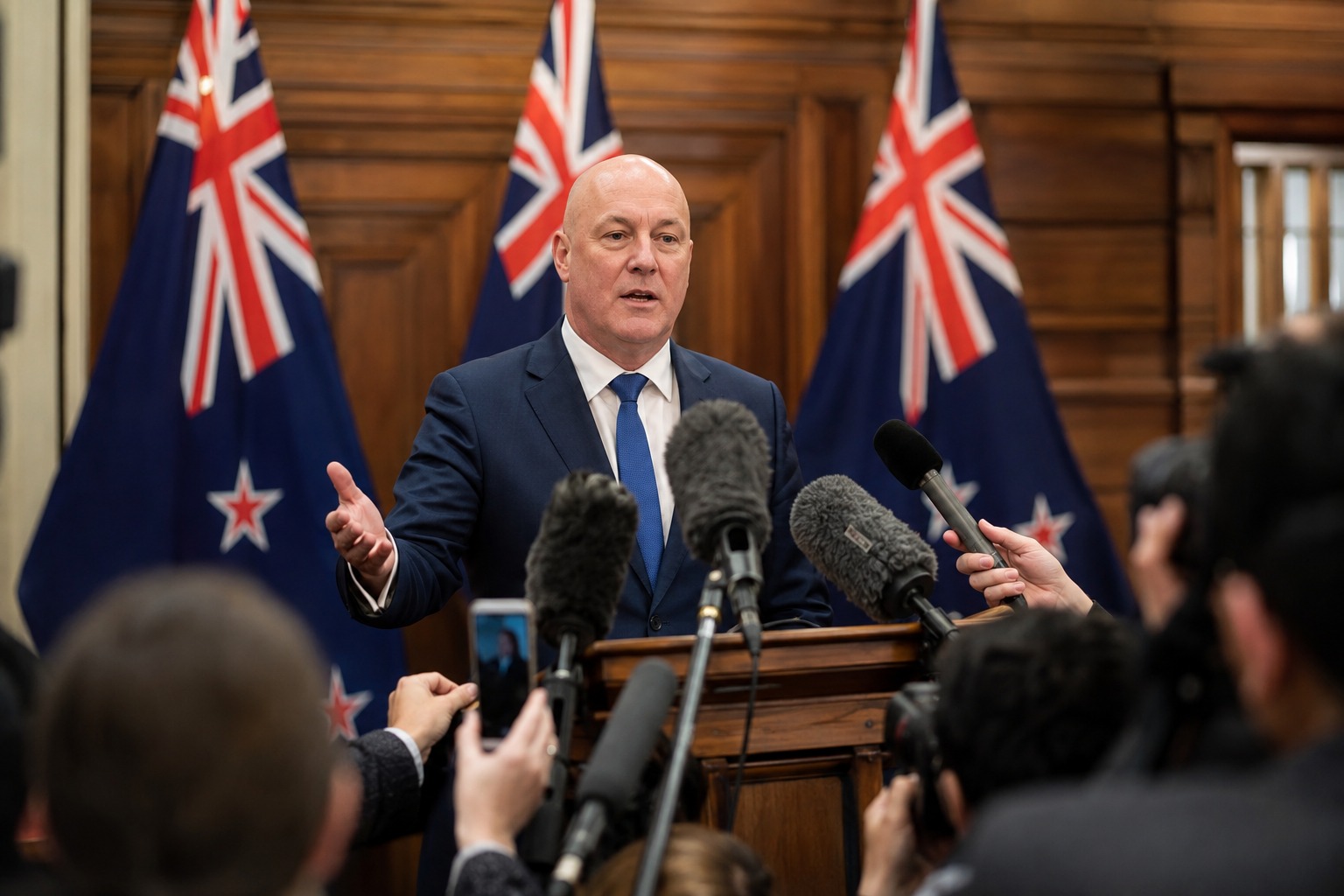
New Zealand’s government has introduced legislation that would bar every child under the age of 16 from holding a social media account, and platforms that fail to comply could be fined as much as 10 percent of their global revenue.
Prime Minister Christopher Luxon unveiled the bill this week, framing it as a response to what he described as the harm being done to a generation of New Zealand children. He said social media is exposing young people to harmful content, addictive technology and pressures they are not equipped to handle, and that the effects are showing up in their family life, mental health, sleep and education.
Why This Is Happening Now
New Zealand is not acting in isolation. Australia passed its own under-16 social media ban, becoming the first country to put an age floor of that kind into law, and governments across Europe and North America have spent the past two years debating age verification, algorithmic feeds and youth mental health.
What makes the New Zealand proposal notable is the size of the penalty attached to it. A fine of up to 10 percent of global revenue is the kind of figure normally reserved for antitrust and data protection enforcement. Applied to the largest platforms, it would run into billions of dollars, which is precisely the point: a penalty small enough to absorb as a cost of doing business would not change behavior.
What the Bill Actually Requires
Under the legislation, social media companies would be required to take reasonable steps to verify the age of their users. The bill contemplates several methods, including checking information already attached to existing accounts, using facial age-estimation technology, and accepting digital identity documents.
The scope is narrower than the headline suggests. Messaging services such as WhatsApp would not be covered, so younger users could still text and call. Multiplayer games including Roblox would also fall outside the ban. The target is the feed-based platforms built around endless scrolling, recommendation algorithms and public posting.
That carve-out reflects a judgment about where the harm is concentrated. Lawmakers pushing these measures have generally pointed not at communication itself but at the design of algorithmic feeds, which serve an unlimited stream of content selected to hold attention.
The Political Math Does Not Add Up Yet
For all the attention the announcement has drawn, the bill does not currently have the votes. Two of the three parties in Luxon’s own coalition government have said they will vote against it, leaving the proposal short of a majority.
Luxon acknowledged that the bill will not move through parliament before the November 7 election. That pushes the decision onto whichever parties hold seats after the vote, effectively turning the proposal into a campaign issue rather than an imminent law. Critics of the approach argue that mandatory age verification would require platforms to collect more identity data on every user, not just minors, and that the privacy cost would be borne by the entire population. Supporters counter that the current system, which relies on children self-reporting their birth date, amounts to no verification at all.
What This Means for Families
For parents, the practical question is whether a legal age floor would change anything in their own home. Age verification systems have a mixed record, and determined teenagers have historically found ways around them. But supporters argue the point is not to build an impenetrable wall. It is to shift responsibility away from individual parents negotiating screen time alone and onto the companies that design the products.
The broader debate now facing New Zealand voters is the same one surfacing in capitals around the world: whether mandatory age checks meaningfully protect children, or whether they simply hand technology companies more personal data about everyone while leaving the underlying design of these platforms untouched.
Stay informed on the stories that matter most. Follow Palmedia News on Facebook and bookmark palmedianews.com for breaking news and analysis.