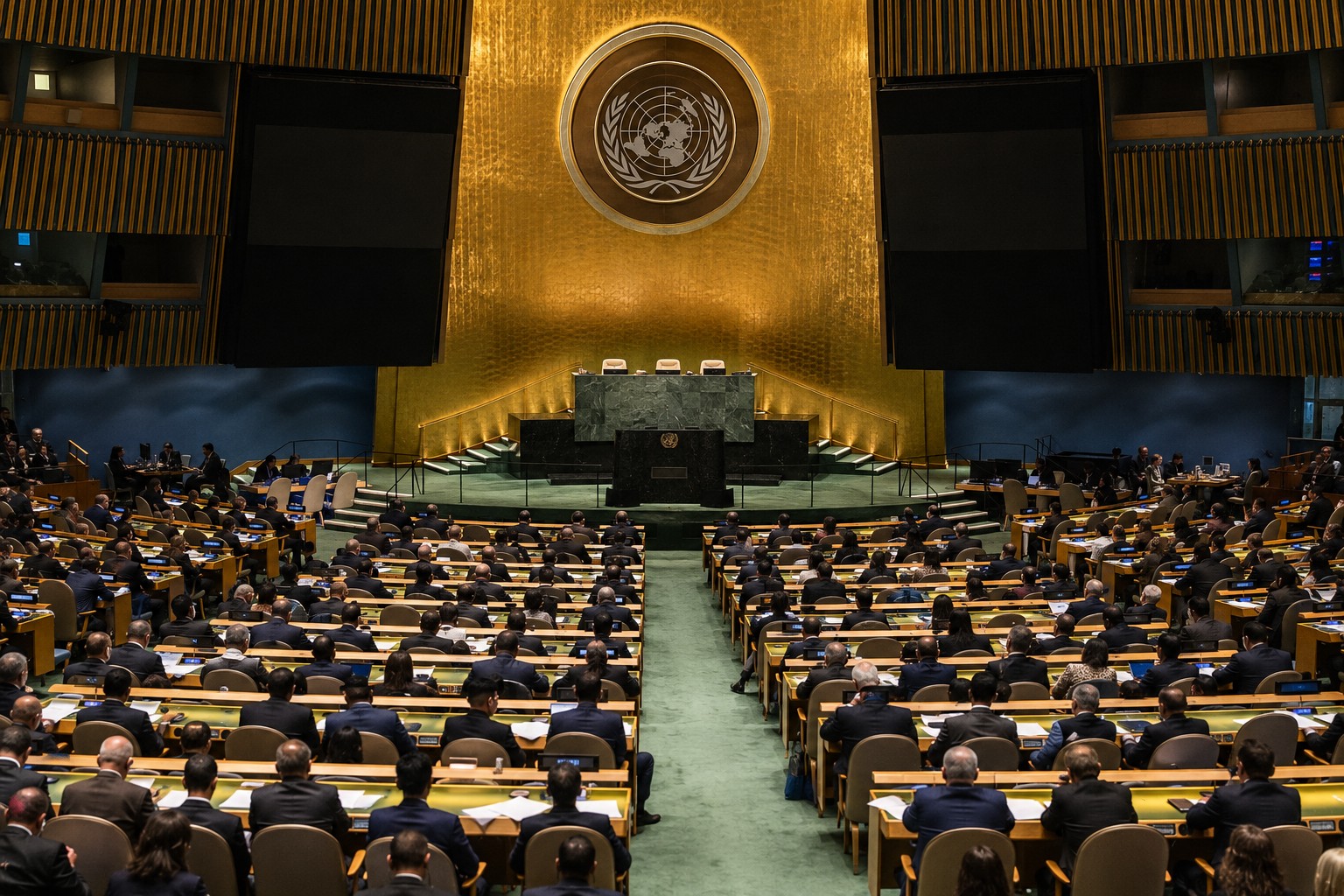
The United States has begun the process of transferring $725 million to the United Nations, the first major movement on a debt that has grown to roughly $5 billion and left the world body warning about its own finances.
The State Department is moving the money toward the U.S. share of the U.N. regular budget, along with a separate $125 million earmarked for peacekeeping operations in Haiti and the Democratic Republic of Congo. Together, the two payments cover less than 20% of what Washington is behind on.
How the Debt Got This Big
The United States is the single largest financial contributor to the United Nations, assessed at roughly 22% of the regular budget and about 25% of peacekeeping costs. That position makes American payments the backbone of U.N. operations, and it makes American arrears uniquely damaging when they pile up.
The current shortfall breaks down into two buckets: more than $2 billion in unpaid regular budget dues, and roughly $3 billion tied to peacekeeping missions. Withholding is not new for Washington, and it has been used by administrations of both parties as leverage. What is different now is the scale. Senior U.N. officials have spent months warning publicly that the organization is facing a cash crunch severe enough to force cuts and delay operations.
What Is Actually Being Paid
The $725 million figure applies to the regular budget. The additional $125 million is directed specifically at peacekeeping in Haiti and the Democratic Republic of Congo, two of the missions under the heaviest operational strain.
There is an important caveat. Beginning the transfer is not the same as completing it. As of late last week, no funds had actually moved. The process had been initiated on the U.S. side, and the money is expected to clear before President Donald Trump addresses the U.N. General Assembly in New York next month.
Officials have also tied any payments beyond this tranche to continued reform inside the organization. That condition matters: it means the remaining balance is not scheduled, not promised, and not guaranteed. It is contingent on how the administration judges the U.N. response.
The Argument on Both Sides
Supporters of the payment frame it as a concrete step toward restoring American standing at the U.N. after a long stretch of arrears. In this view, paying down even a portion of the debt buys back influence at a moment when the United States wants leverage on peacekeeping mandates, budget reform and staffing.
Critics see it differently. Their argument is that assessed contributions are treaty obligations, not discretionary grants, and that attaching reform conditions to a bill the United States already agreed to pay turns a legal duty into a bargaining chip. They also note the arithmetic: a payment covering under a fifth of the debt leaves the underlying problem intact.
The Reform Fight Behind the Money
The condition attached to future payments points at a longer argument over how the United Nations spends and staffs itself. Washington has pushed for tighter budget discipline, consolidation of overlapping agencies and clearer performance benchmarks for peacekeeping mandates, arguing that the largest contributor should get measurable accountability in return.
U.N. officials have countered that reform is difficult to execute while the organization is simultaneously running short of cash. Hiring freezes, delayed reimbursements to troop-contributing countries and postponed programs are the practical consequences of arrears, and they make structural change harder rather than easier. That circular problem is the core tension: the payer wants proof of reform before paying, and the institution says it needs the payments to reform.
Whether this transfer breaks that loop or simply pauses it is the open question heading into the General Assembly session.
What This Means for Americans
U.N. funding rarely shows up in a household budget conversation, but it shapes outcomes that do reach American life — peacekeeping missions that affect migration pressures, humanitarian operations that respond to famine and disease outbreaks, and the diplomatic standing the United States brings to negotiations on trade, security and public health. When American funding stalls, U.S. influence over how those programs run tends to stall with it. When it resumes, so does the leverage.
The next marker to watch is straightforward: whether the $725 million actually lands before the General Assembly session, and whether anything follows it.
Stay informed on the stories that matter most. Follow Palmedia News on Facebook and bookmark palmedianews.com for breaking news and analysis.