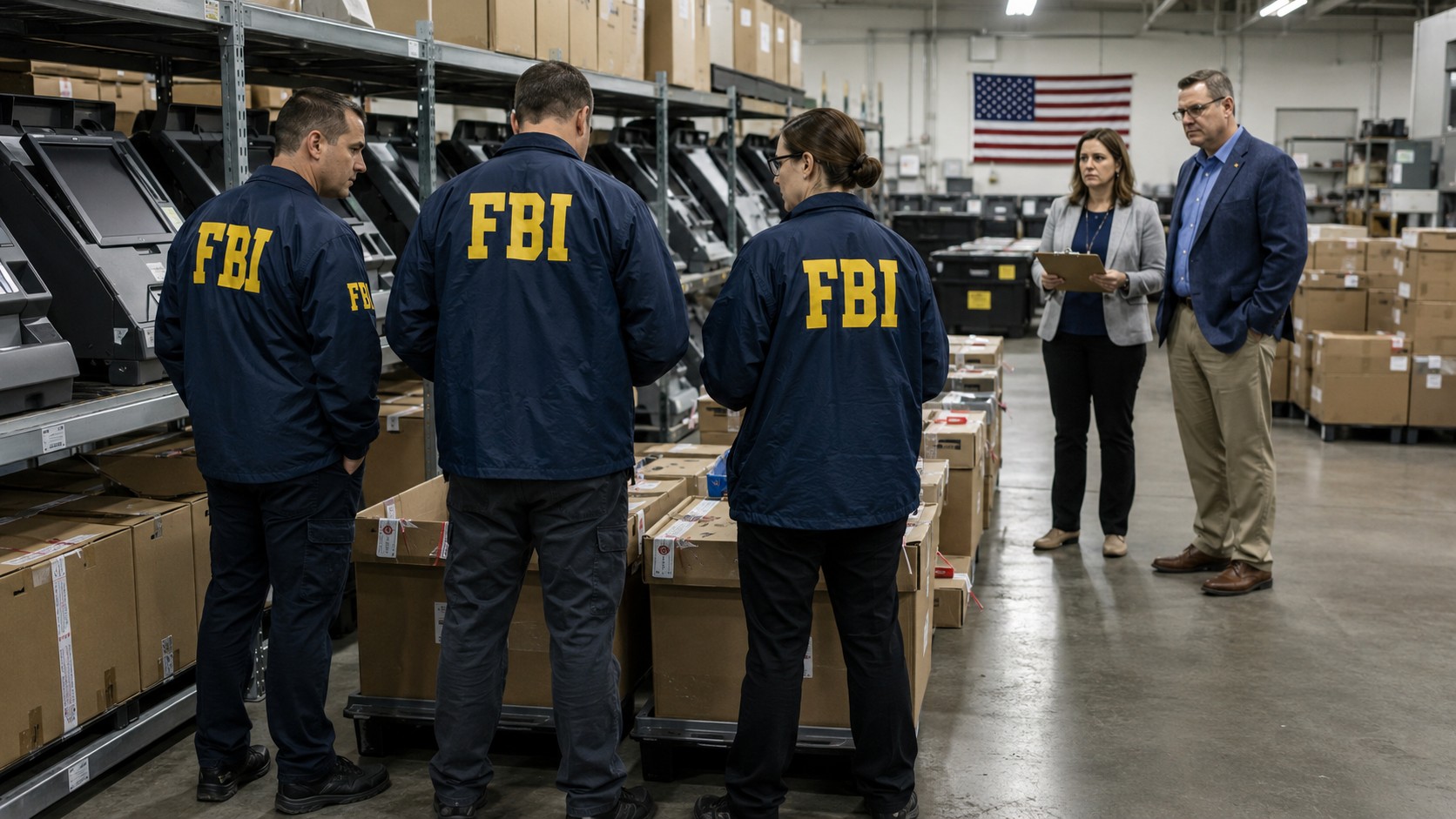
The Democratic National Committee has sued the Justice Department and the FBI, demanding records on whether federal agents have ever drawn up plans to seize ballots, voting machines, or other election equipment ahead of the 2026 midterm elections.
The lawsuit is not a challenge to any specific policy. It is a Freedom of Information Act case. The DNC says it filed records requests months ago and has received nothing in return, and it is now asking a federal court to force the government to hand the documents over.
Why The DNC Filed The Requests
The party sent requests to the FBI and to the Criminal Division of the Department of Justice seeking any records related to the seizure of ballots, voting machines, and other voting system components. According to the complaint, nearly five months passed without a single responsive document being produced.
Three developments sit behind those requests. Federal agents seized archived 2020 ballots from Fulton County, Georgia. In January, President Trump said he regretted not ordering the National Guard to take control of voting machines after the 2020 election. And White House Press Secretary Karoline Leavitt said the administration could not guarantee that federal law enforcement would not be deployed to polling places.
Taken together, the DNC argues, those events make the question worth asking on the record rather than in speculation.
The Argument Is About Timing
The core of the DNC case is not that seizing evidence is inherently improper. Law enforcement seizes evidence in criminal investigations routinely, and courts supervise that process. The party is focused on a narrower window: the period between Election Day and certification.
During that stretch, ballots are still being counted, recounts may be pending, and election officials are responsible for an unbroken chain of custody. That chain is what lets a county prove, later and under scrutiny, that the ballots it counted are the same ballots voters cast. Removing ballots or equipment mid-count, the complaint argues, could disrupt tabulation, complicate a recount, and make results harder to defend even when nothing improper occurred.
Election administrators across both parties have raised similar chain-of-custody concerns for years, usually in the context of unauthorized access to equipment rather than federal action.
What The Administration Has Said
The administration has not detailed any plan to seize election equipment during the midterms, and no evidence has been made public that such a plan exists. That distinction matters: the lawsuit seeks records, not a court ruling on conduct that has not been shown to have occurred.
A federal judge has ordered the government to respond to the records request. That order does not decide whether any responsive documents exist. It decides that the agencies have to search, produce what they find, and justify any withholding under FOIA exemptions.
Supporters of the administration have characterized the suit as a political exercise built on hypotheticals. Supporters of the DNC counter that FOIA exists precisely so the public does not have to take an agency at its word.
What This Means For Americans
For most voters, the practical stakes are simple. Elections are run by counties and states, and the machinery of a local election is handled by local officials. A dispute over federal records will not change how anyone casts a ballot in November. What it could change is how much the public knows about what federal agencies considered doing, and when. If documents exist, this case is how they surface. If none exist, that answer is on the record too.
Stay informed on the stories that matter most. Follow Palmedia News on Facebook and bookmark palmedianews.com for breaking news and analysis.