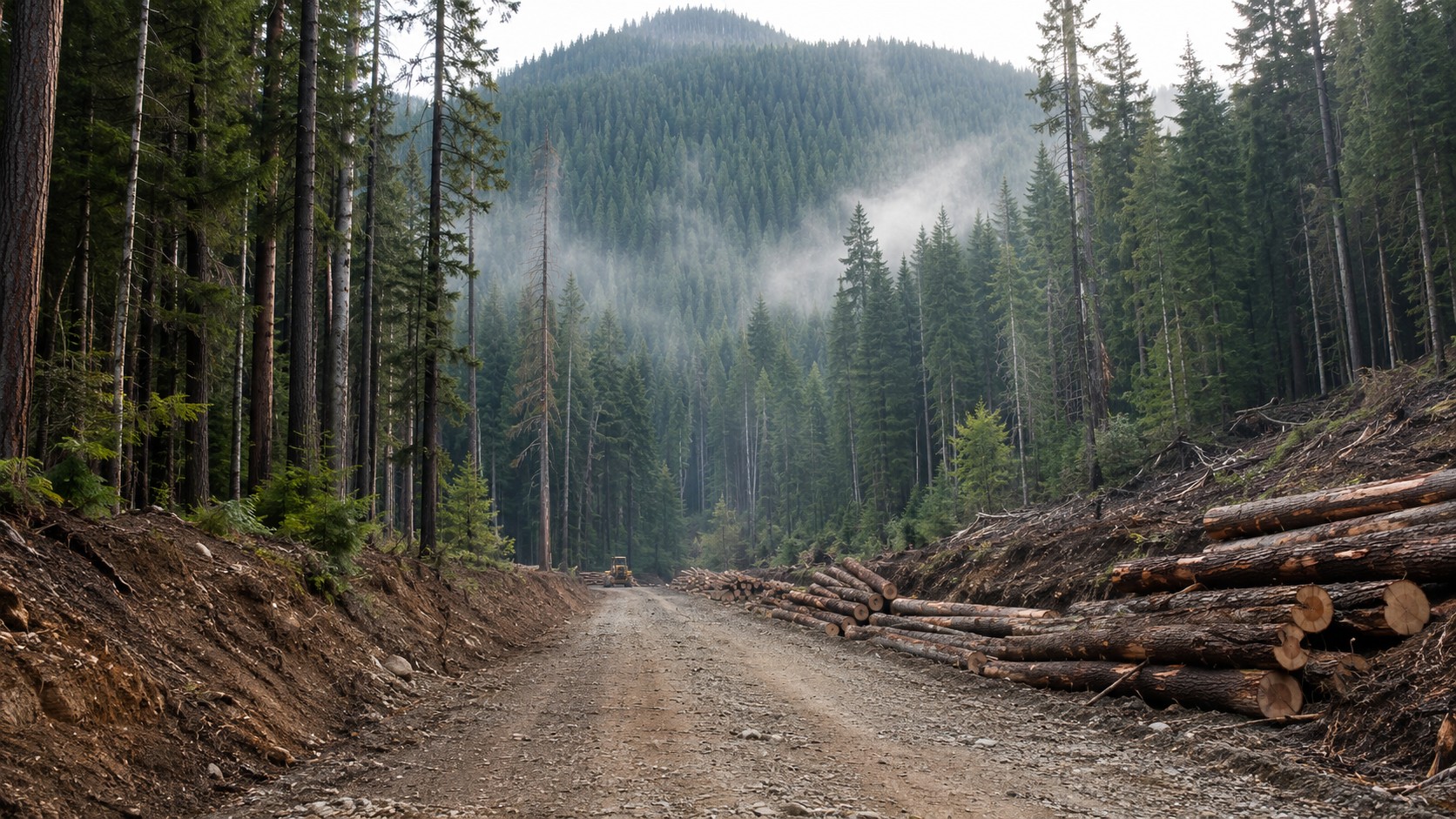
The U.S. Forest Service has formally moved to erase the single largest land protection measure of the last quarter century. On Tuesday the agency filed a proposal to rescind the 2001 Roadless Area Conservation Rule, the policy that blocks new road construction — and with it most commercial logging and mining — across roughly 45 million acres of national forest from Alaska’s Tongass to the pine woods of Florida.
If the repeal is finalized, decisions about where roads get cut and where timber gets sold would shift from a single national standard to individual forest managers, forest by forest.
What the Roadless Rule Actually Does
The rule was adopted in the final days of Bill Clinton’s presidency and took effect in 2001. It does not create wilderness areas and it does not close forests to the public. What it does is far simpler: it bars the construction of new roads in designated backcountry areas of the national forest system.
That single restriction carries enormous weight. Commercial timber harvest at scale requires roads to move equipment in and logs out. Hardrock mining requires access. By freezing road building, the rule effectively froze industrial development across tens of millions of acres without ever having to ban those activities outright.
For 25 years it has been one of the most contested policies in the American West. Timber states have fought it in court repeatedly. Conservation groups have defended it just as hard. Both sides understand exactly what is at stake in a rule that sounds, on paper, like a paperwork question about roads.
Why the Administration Says It Has to Go
Agriculture Secretary Brooke Rollins framed the repeal as a response to wildfire. “Our forests can’t afford another decade of inaction,” she said in a statement announcing the proposal, calling it time to “turn the page on the failed roadless rule and return our forests to health and productivity.”
The agency’s argument is that a single national restriction cannot account for conditions that vary enormously between a rainforest in southeast Alaska and a drought-stressed stand in the southern Sierra. Officials say overgrown stands, insect outbreaks and disease have turned healthy landscapes into tinderboxes, and that fire crews need physical access to remote country that currently has none.
Republican governors in Montana, Utah and Wyoming endorsed the move in the same announcement. Utah Gov. Spencer Cox said rescinding the rule “restores the flexibility to make thoughtful decisions based on the needs of each forest and each community.” Nick Smith of the American Forest Resource Council, a logging industry group, called the rule “an outdated, rigid, top-down one-size fits all policy.”
The Case Against Repeal
Conservation groups describe the rule in categorical terms. Drew Caputo, a senior attorney with Earthjustice, called it “the most important land protection measure of the last 60 years,” arguing it protects public lands that belong to every American, not just the states they sit in.
Opponents also push back directly on the wildfire rationale. Caputo pointed to published research finding that more than 80 percent of wildland fires in the United States are started by people. More backcountry roads mean more people reaching more remote country — and, he argues, more ignitions. A thrown cigarette or a hot engine on dry grass does not need a lightning strike to start a fire.
The Money Question
A separate objection comes from budget watchdogs rather than environmentalists. Steve Ellis, president of the nonpartisan group Taxpayers for Common Sense, warned that reopening these areas revives a practice the roadless rule helped end: federal timber sales that cost taxpayers more to administer than they returned.
“Before the roadless rule, we would build roads into areas and we would have money-losing timber sales that would cost taxpayers billions of dollars,” Ellis said. He also noted that the Forest Service is already carrying a road maintenance backlog estimated at roughly $6 billion — a figure that grows, not shrinks, with every new mile of road.
What This Means for Americans
These are public lands, which means every American already owns a share of the 45 million acres in question. The practical effects would land unevenly: hunters, anglers and hikers in Western states would see the character of familiar country change first, while rural communities near timber operations could see jobs and tax revenue. Downstream, road building in steep terrain raises real questions about erosion and drinking water quality for towns far from the cut.
Nothing is final yet. Public comment on the proposal runs through September 21, 2026, and any repeal is near certain to draw legal challenges — the same courtroom fight that has followed this rule since the day it was written.
Stay informed on the stories that matter most. Follow Palmedia News on Facebook and bookmark palmedianews.com for breaking news and analysis.