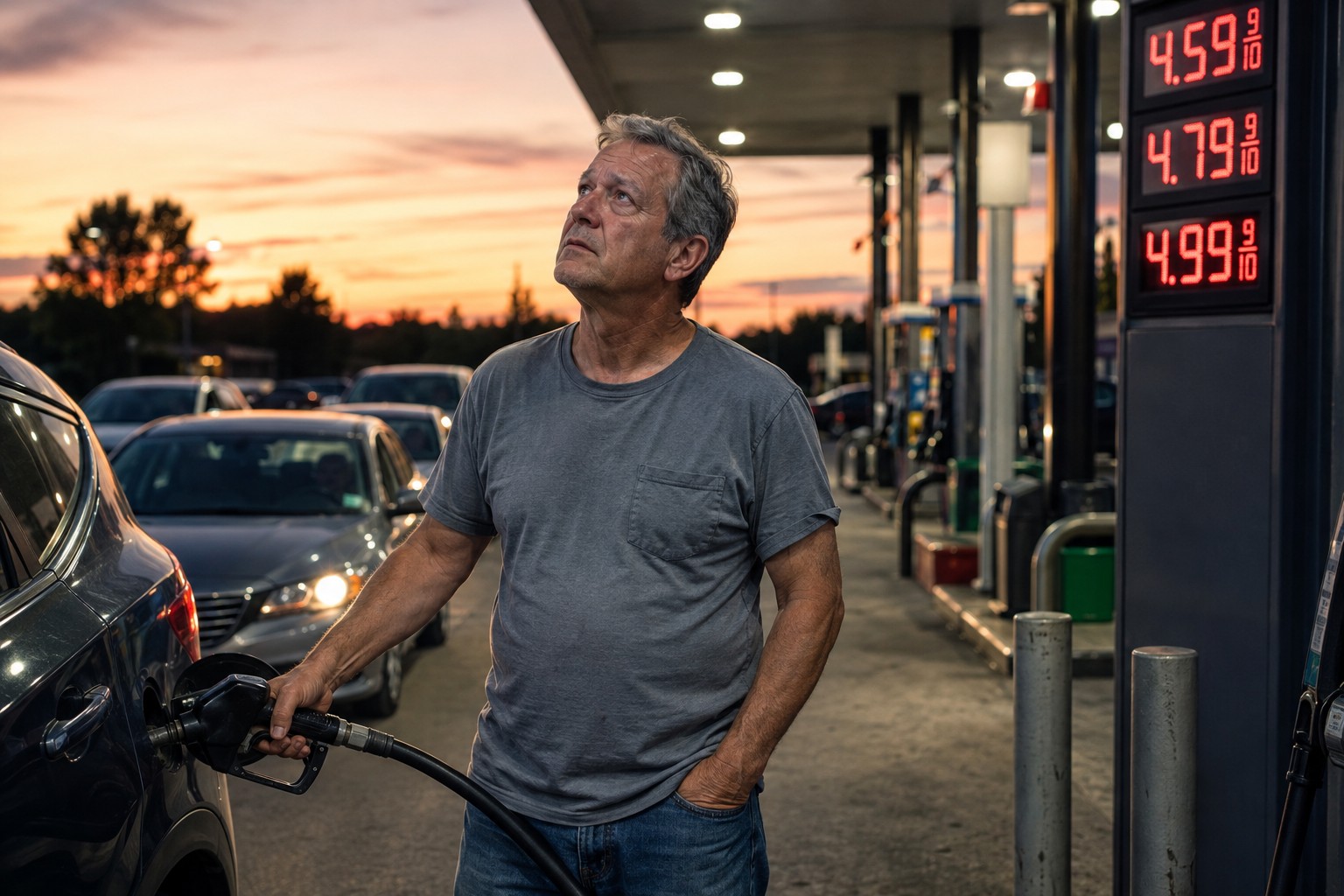
American drivers are paying more at the pump in mid-August than at any point this late on the calendar in recorded history. The national average for regular unleaded climbed to $4.03 a gallon, about 16 cents higher than it was a month ago, according to AAA. The number is not merely high for summer. It is a record that has never been set before at this point in any year.
A Threshold No August Has Ever Crossed
Patrick De Haan, head of petroleum research at GasBuddy, put the milestone plainly, noting that the national average “has never been above $4/gal after Aug. 12” in any previous year on record. Gasoline prices normally soften once the peak summer travel season passes. This year they have done the opposite.
It is also the second stretch above $4 a gallon in 2026, after prices dipped below that line periodically in June and July. So far this year the national average has spent 103 days, roughly 46 percent of the time, at or above $4 a gallon. That is the highest count of $4-plus gas since 2022, the year Russia invaded Ukraine and scrambled global energy markets.
The Pressure Is Coming From the Water, Not the Pump
The cause is not a refinery outage or a hurricane. It is a standoff roughly 7,000 miles away. An impasse between the United States and Iran over shipping through the Strait of Hormuz has left the single most important oil passage on earth nearly empty. Just 14 tracked vessels made the crossing on Tuesday, according to intelligence data firm Kpler, a fraction of normal traffic.
The United States enforced its blockade of the strait by firing on a Panama-flagged ship that attempted to cross the Gulf of Oman. Separately, Houthi attacks on Saudi Arabian oil tankers in the Red Sea area have raised further concerns about supply interruptions, squeezing a second major shipping corridor at the same time.
Iran has shown no sign of stepping back. The country’s deputy parliament speaker ruled out negotiations with Washington and said the Strait of Hormuz would not return to normal. With talks stalled, the bottleneck has no clear expiration date.
What the Market Is Actually Signaling
Crude has held relatively steady, with West Texas Intermediate near $82 a barrel and Brent near $88. But the more revealing number is further downstream. Gasoline on global spot markets is trading around $130 per barrel, far above the $80 to $90 range in the futures market. That gap suggests the physical supply of refined fuel is tighter than the headline crude price implies, and that pressure at the pump may not be finished.
Tom Kloza, chief oil analyst at Gulf Oil, told Yahoo Finance that “the final third of 2026 will be considerably more expensive than what we’ve witnessed in previous years.” Absent major hurricanes this season, he projected pump prices between $3.60 and $3.90 a gallon by this fall’s midterm elections, which would again be the highest ever recorded for that point in the year.
The Debate Now Underway
Supporters of the blockade argue it is a necessary instrument of pressure, and that backing away from it now would reward Tehran for closing an international waterway. Critics counter that the policy has produced no diplomatic movement while transferring a measurable cost onto American households every week.
The inflation data complicates both arguments. The gasoline index actually fell 2.9 percent in July from June, yet it remained up 24.6 percent from a year earlier. Prices eased month to month while still sitting far above where they were last summer.
What This Means for Americans
For most households the effect is immediate and unavoidable. Every fill-up costs more, and because fuel is an input to nearly everything that moves by truck, higher pump prices tend to work their way into groceries and delivered goods over the following months. Commuters and small businesses that depend on vehicles absorb it first. With the midterm elections approaching and analysts projecting record prices for the fall, the cost of the standoff is likely to remain a household-level issue rather than an abstract foreign policy question.
Stay informed on the stories that matter most. Follow Palmedia News on Facebook and bookmark palmedianews.com for breaking news and analysis.