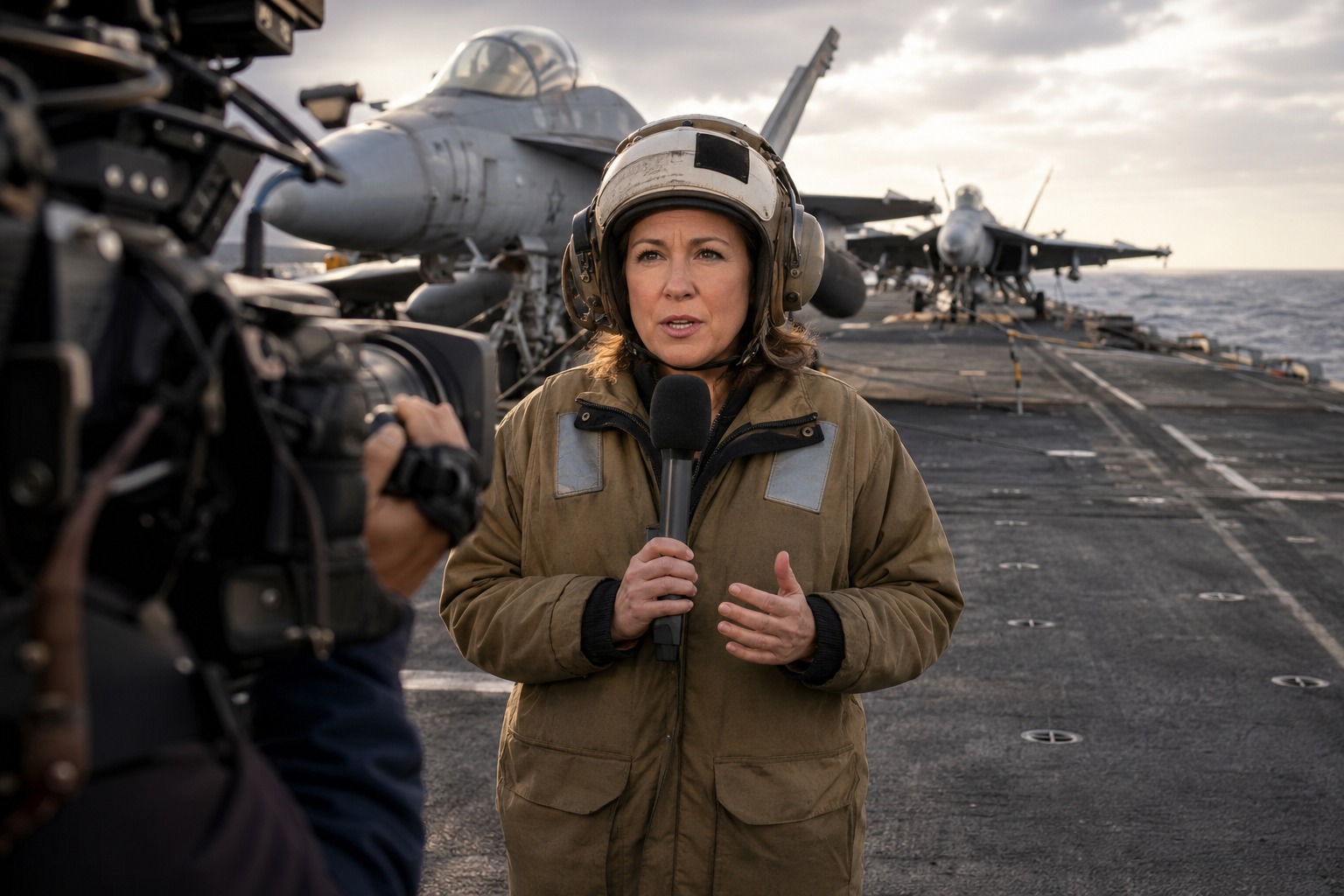
A CNN anchor spent three days living aboard the USS Abraham Lincoln, and the account she brought back does not match either side of the argument that has consumed Washington for the past two weeks.
Pamela Brown was granted rare access to the aircraft carrier in July. The Navy let her and CNN photojournalist John Torigoe move around the ship largely freely with an escort, talking to whoever they wanted. Over three days she had dozens of conversations with sailors, officers and enlisted alike. Her conclusion, published this week, was that the reality aboard the Lincoln is messier than the headlines on either side of it.
Nine Months at Sea
The Lincoln has been deployed for close to nine months. What began as a routine presence mission turned into sustained combat operations, and the carrier has been operating in the Arabian Sea as part of the ongoing confrontation with Iran.
In recent weeks the ship became a political flashpoint. Reporting described black mold in living spaces, food quality bad enough that sailors said people were losing weight, and mental health strain across a crew of roughly 5,000. Navy Times reported that multiple sailors had attempted to go overboard during the extended deployment, based on accounts from families. Members of Congress began demanding answers from the Navy about conditions and about how long the deployment would run.
What Brown Actually Found
Brown was careful about the limits of what she saw. She did not visit every corner of the ship and did not speak to all 5,000 crew members. But she pushed to see as much as three days allowed, and what she found did not resolve neatly.
On conditions, one sailor messaged her that the food has slightly increased in edibility, adding that a few months earlier a lot of people were losing weight because of it. Brown called that not a five-star review, but also not the crisis some coverage had implied. Another sailor told her the ship had black mold in places for a while, though Brown said she did not see any herself during the visit. Torigoe reported showering with hot water on demand and no restrictions on time, said he did see mold and old pipes, and described being amazed at how professional the sailors were.
On morale, the picture was sharper. What was hitting the largely 20-something crew hardest was not the plumbing. It was the calendar. One sailor told Brown the mission had been pitched as roughly two weeks of combat operations and instead became seven months, with the stated purpose shifting over time from helping Iranian protesters, to denuclearizing Iran, to supporting a blockade. The sailor described the inconsistency as a serious blow, particularly for families whose lives were on hold waiting for the ship to come home.
The Fight Over the Narrative
The Lincoln has become a proxy for a larger political argument. Asked on Friday whether the deployments had gone on too long, President Donald Trump said no, and added that they had not gone on nearly long enough. Defense Secretary Pete Hegseth has said reporting about the ship completely misrepresented conditions and morale on board.
Brown wrote that the administration sentiment did not go over well with many of the sailors she remains in contact with, and that the reality is far more complicated than a soundbite. Critics of the deployment argue the shifting mission rationale is the core problem and that the Navy owes the crew a clear end date. Defenders argue that hardship at sea is inherent to carrier deployments and that isolated complaints have been amplified into a false picture of a ship in crisis.
Brown landed between them. Conditions were bad, then better, she wrote. Morale is low for some and fine for others, and driven less by mold than by not knowing for so long when they are coming home.
What This Means for Americans
Roughly 5,000 Americans are on that ship, and tens of thousands more are family members watching a return date move again and again. The question the Lincoln raises is not really about mold or menus. It is about how long the country asks its service members to stay deployed when the stated purpose of the mission keeps changing, and who is responsible for telling them when it ends. Congress is now asking the Navy that question directly.
Stay informed on the stories that matter most. Follow Palmedia News on Facebook and bookmark palmedianews.com for breaking news and analysis.