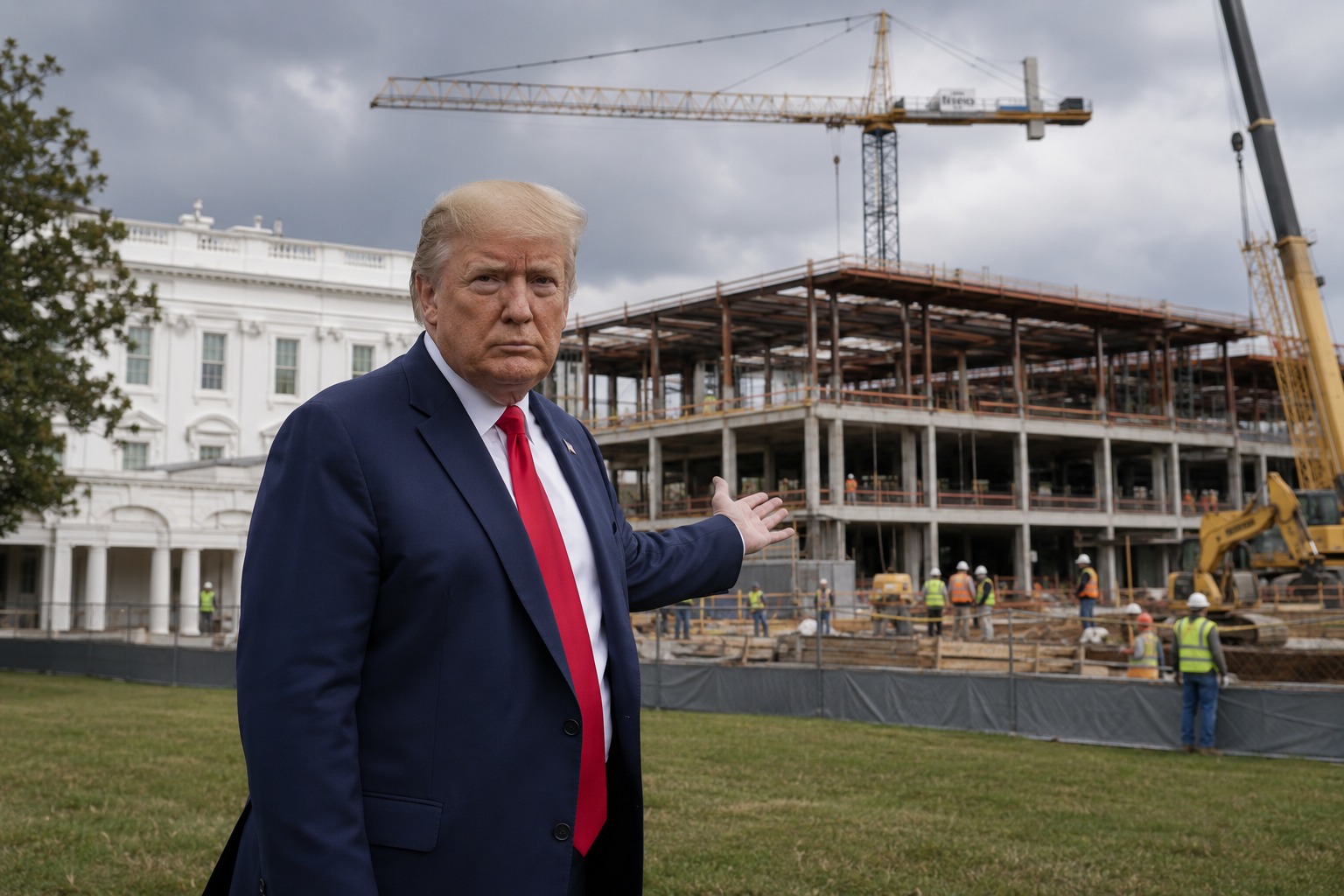
The Trump administration has asked the Supreme Court to step in and let construction of the new White House ballroom continue, telling the justices that the project is now “beyond the point of no return.” The emergency appeal escalates a months-long legal fight over a $400 million structure built on the site of the demolished East Wing.
In the filing, a White House official argued that the concrete-and-steel superstructure already rising on the grounds cannot simply be halted mid-build. The freestanding walls, the administration says, “cannot be left as-is without being tied together with the designed structural steel.” Officials put the project at roughly 65 percent complete.
How the Fight Started
The ballroom is one of the most contested construction projects in the country. It sits where the White House East Wing once stood — a historic section of the complex that was torn down to make room for the new 90,000-square-foot addition. The scale of the demolition, and the speed with which it happened, caught many preservationists off guard.
The National Trust for Historic Preservation sued, arguing that the administration razed the East Wing and began building without ever seeking authorization from Congress. At the heart of the case is a question about process: who has the authority to reshape the White House grounds, and what approvals are required before a wing of one of the most recognizable buildings in America can be demolished.
The Court Battle
A federal appeals court sided with the challengers and ordered construction to stop. That injunction is scheduled to take effect on August 21 — a hard deadline that set off the administration’s race to the Supreme Court. Rather than pause the cranes, the administration filed an emergency request for a stay that would keep the work moving while the case plays out.
The “point of no return” argument is central to that request. The administration is telling the justices that a half-finished steel-and-concrete shell poses its own risks if it is frozen in place, and that stopping now could leave freestanding walls without the structural connections they were designed to have. Critics counter that the urgency is a problem of the administration’s own making — the East Wing was demolished and the build started before the courts had ruled.
What Happens Next
The Supreme Court is expected to ask the National Trust for a response in the coming days before deciding whether to grant the stay. If the justices side with the administration, construction continues and the ballroom moves toward completion. If they let the appeals court injunction stand, work stops on August 21 while the underlying legal questions are resolved.
Supporters of the project describe the ballroom as a long-overdue upgrade to a building that hosts state dinners, foreign leaders, and major national events. Opponents see something harder to reverse — a historic piece of the White House erased before anyone agreed it should be, and a precedent for how future administrations might treat the building.
Why It Matters
Beyond the headlines, the case tests a basic question of accountability: how much can be built, torn down, or transformed at the seat of the executive branch before the courts or Congress weigh in. The White House belongs to the public, and the outcome will shape how much say the public’s representatives have over what happens to it. For now, a partially built ballroom sits on the South Grounds while the nation’s highest court decides whether the work goes on.
Stay informed on the stories that matter most. Follow Palmedia News on Facebook and bookmark palmedianews.com for breaking news and analysis.