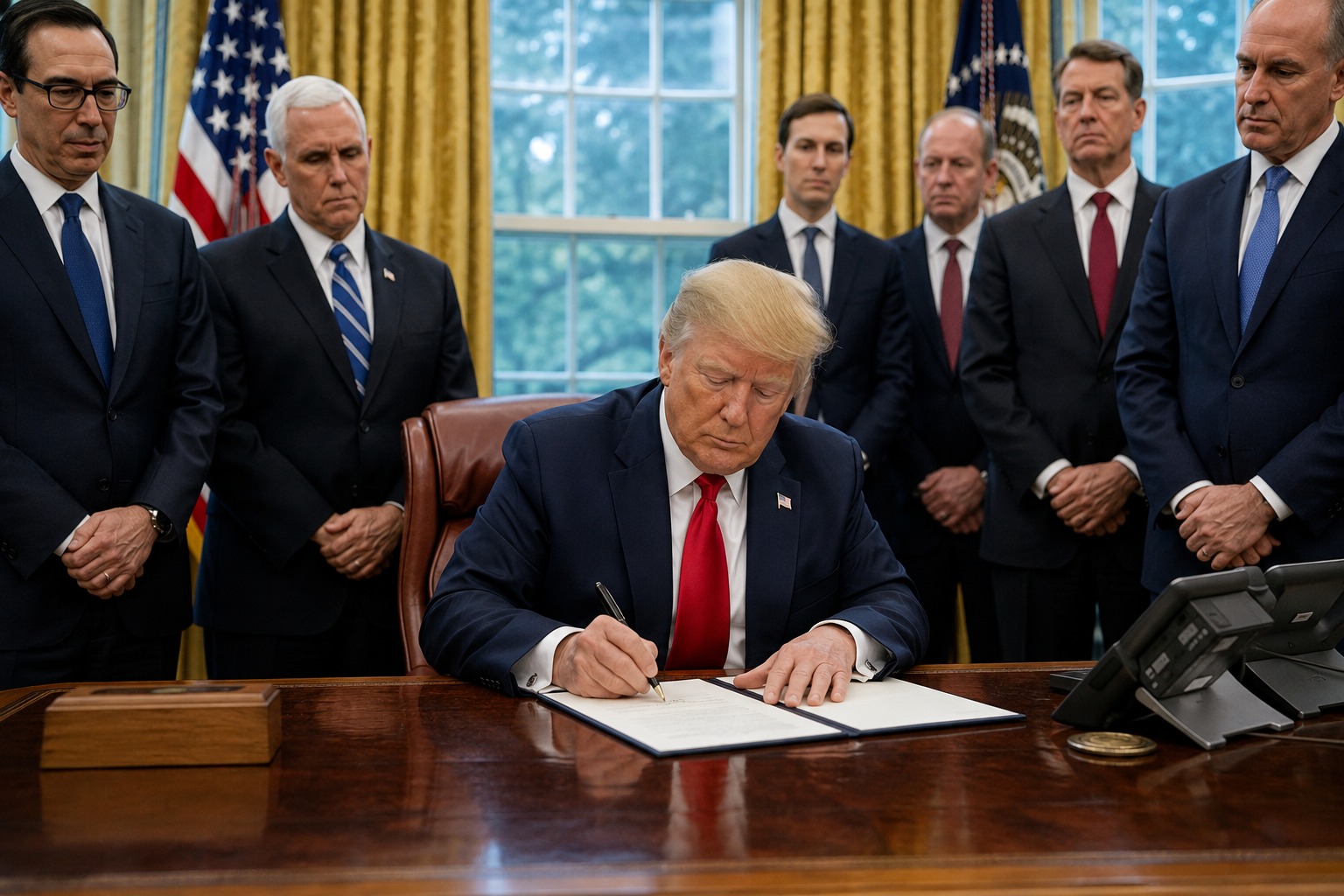
President Donald Trump signed two new executive orders on Thursday aimed at limiting birthright citizenship, launching a second attempt to narrow who automatically qualifies as a U.S. citizen just weeks after the Supreme Court struck down his first order.
The move marks a renewed push on one of the most contentious issues of Trump’s second term, and it sets up what legal experts on all sides expect to be another lengthy court battle over the meaning of the 14th Amendment.
What the New Orders Do
Unlike the sweeping order Trump signed on his first day back in office, the two new actions take a narrower, more targeted approach. The first is aimed at commercial “birth tourism” — the practice of foreign nationals traveling to the United States specifically to give birth so that their children become automatic citizens.
The second order broadens the categories of people the administration considers ineligible for birthright citizenship. According to the White House, that expanded definition includes the children of foreign citizens who lobby on behalf of foreign governments. As of the signing, the White House had not released the full text of either order, leaving key legal details unclear.
A Response to the Supreme Court
The timing is no accident. In June, the Supreme Court ruled 6-3 that Trump’s original executive order — signed in January 2025 — violated the 14th Amendment and was unlawful. That earlier order had attempted to end birthright citizenship outright for the children of parents in the country illegally or on temporary visas.
The 14th Amendment, ratified in 1868, states that all persons born or naturalized in the United States are citizens. For more than a century, courts have interpreted that language to guarantee citizenship to nearly everyone born on American soil, regardless of their parents’ immigration status. The June ruling reaffirmed that long-standing understanding and represented a significant setback for the administration.
The Administration’s Argument
White House deputy chief of staff Stephen Miller defended the new orders, arguing that some foreign nationals travel to the country for the specific purpose of securing citizenship for a child and later gaining access to public benefits and voting rights. Supporters of the orders say the administration is simply closing loopholes that have been exploited for years.
Critics counter that the president is trying to accomplish through narrower orders what the Supreme Court has already told him he cannot do. Immigration advocates and constitutional scholars have signaled that the new orders will face immediate legal challenges, and many expect the dispute to return to the federal courts within weeks.
What This Means for Americans
For most families, birthright citizenship has been a settled fact of American life for generations. Any change to how it is applied could affect hospital records, passport applications, and the legal status of children born in the United States to non-citizen parents. Because the orders are certain to be challenged in court, their real-world impact will likely remain on hold until judges weigh in — meaning the immediate effect for most people is uncertainty rather than an overnight change.
Stay informed on the stories that matter most. Follow Palmedia News on Facebook and bookmark palmedianews.com for breaking news and analysis.