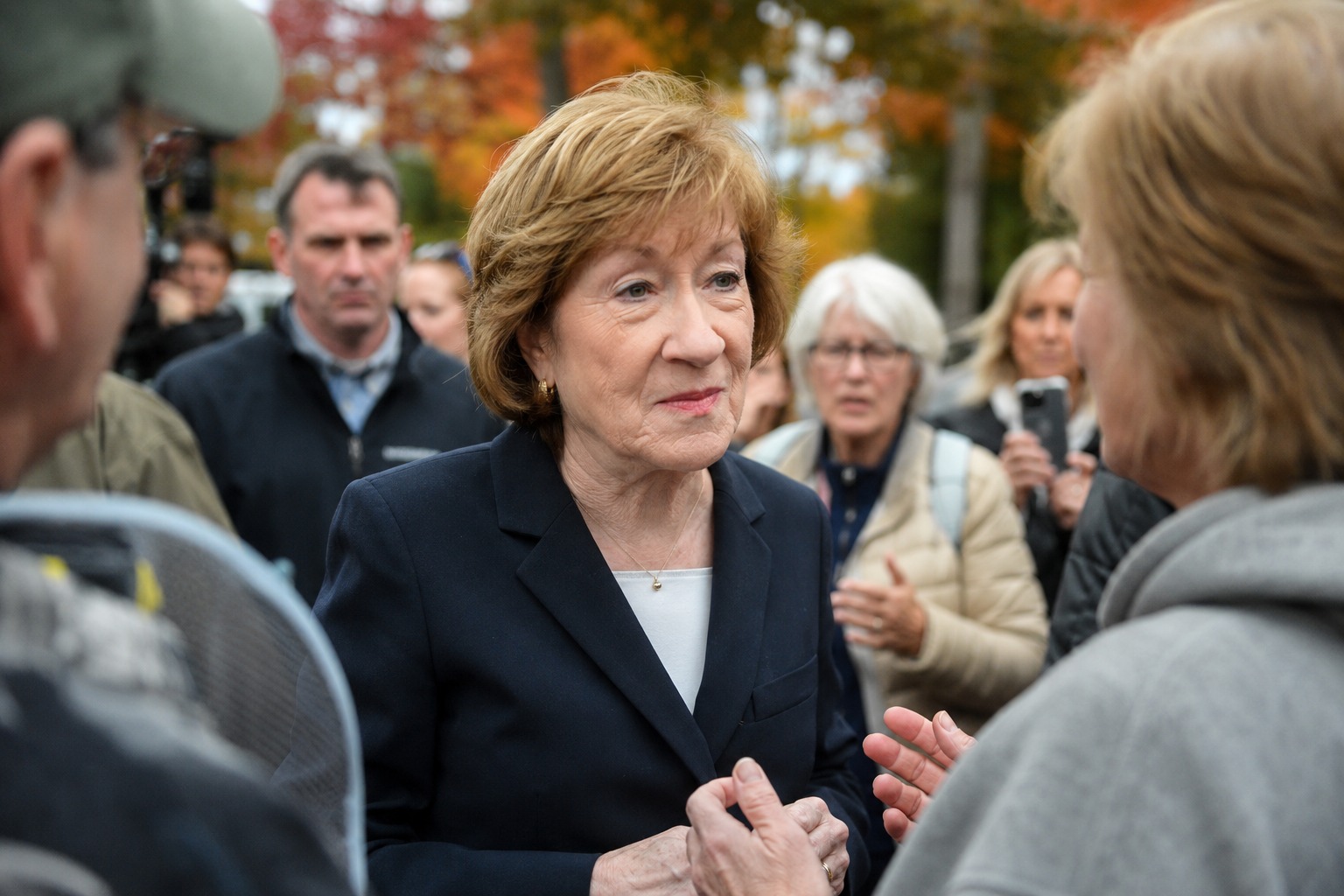
Senator Susan Collins of Maine is seeking another term in 2026, and a single vote she cast nearly a decade ago has become one of the defining questions of her campaign. In 2018, Collins voted to confirm Brett Kavanaugh to the Supreme Court — a justice who later joined the majority that overturned Roe v. Wade. On the trail, voters keep bringing it up.
A Reputation Built on the Center
Collins has represented Maine in the U.S. Senate since 1997, building a reputation as one of the chamber’s few remaining centrists and a Republican willing to break with her party. That reputation was tested in the fall of 2018, when President Trump nominated Kavanaugh to fill the seat vacated by the retiring Justice Anthony Kennedy.
The confirmation fight was among the most contentious in modern history. Collins, viewed as a potential swing vote, delivered a lengthy speech on the Senate floor explaining her decision to support him. She said she believed Kavanaugh viewed Roe v. Wade as settled legal precedent entitled to respect, pointing to his testimony and to their private conversations.
When the Assurance Met Reality
Four years later, that assurance collided with the court’s direction. In June 2022, the Supreme Court issued its decision in Dobbs v. Jackson Women’s Health Organization, overturning Roe and ending the federal constitutional right to abortion that had stood since 1973. Kavanaugh was part of the majority.
Collins responded that the ruling was inconsistent with what she understood the justices — including Kavanaugh and Neil Gorsuch, whom she also supported — to believe about the importance of precedent. She said the outcome was not what she had been led to expect during the confirmation process.
The reversal reshaped the political landscape almost overnight. Abortion access became a central issue in elections across the country, and for Collins, the Kavanaugh vote became shorthand for a larger debate about trust, judgment, and accountability.
The Vote Follows Her
Now, as Collins campaigns for reelection, the vote follows her from town halls to editorial boards. Supporters point to her decades of service, her independent streak, and her willingness to cross party lines on other issues. They argue that a single confirmation vote should not overshadow a long record.
Critics see it differently. They raise the Kavanaugh confirmation at nearly every stop, framing it as the moment her assurances did not match the outcome. For them, the vote is not distant history but a live question about whether her judgment can be trusted with future nominations.
The dynamic highlights how a Supreme Court confirmation — often treated as a Washington process story — can echo through elections years later and thousands of miles from the Capitol.
What This Means for Americans
The situation is a reminder that Senate votes have long tails. A single confirmation can shape the courts for a generation, and the consequences can land in unexpected places — including the campaign trail of the senator who cast it. For voters in Maine and beyond, it raises a broader question about how much weight to give any one decision when judging an elected official’s full record.
Stay informed on the stories that matter most. Follow Palmedia News on Facebook and bookmark palmedianews.com for breaking news and analysis.