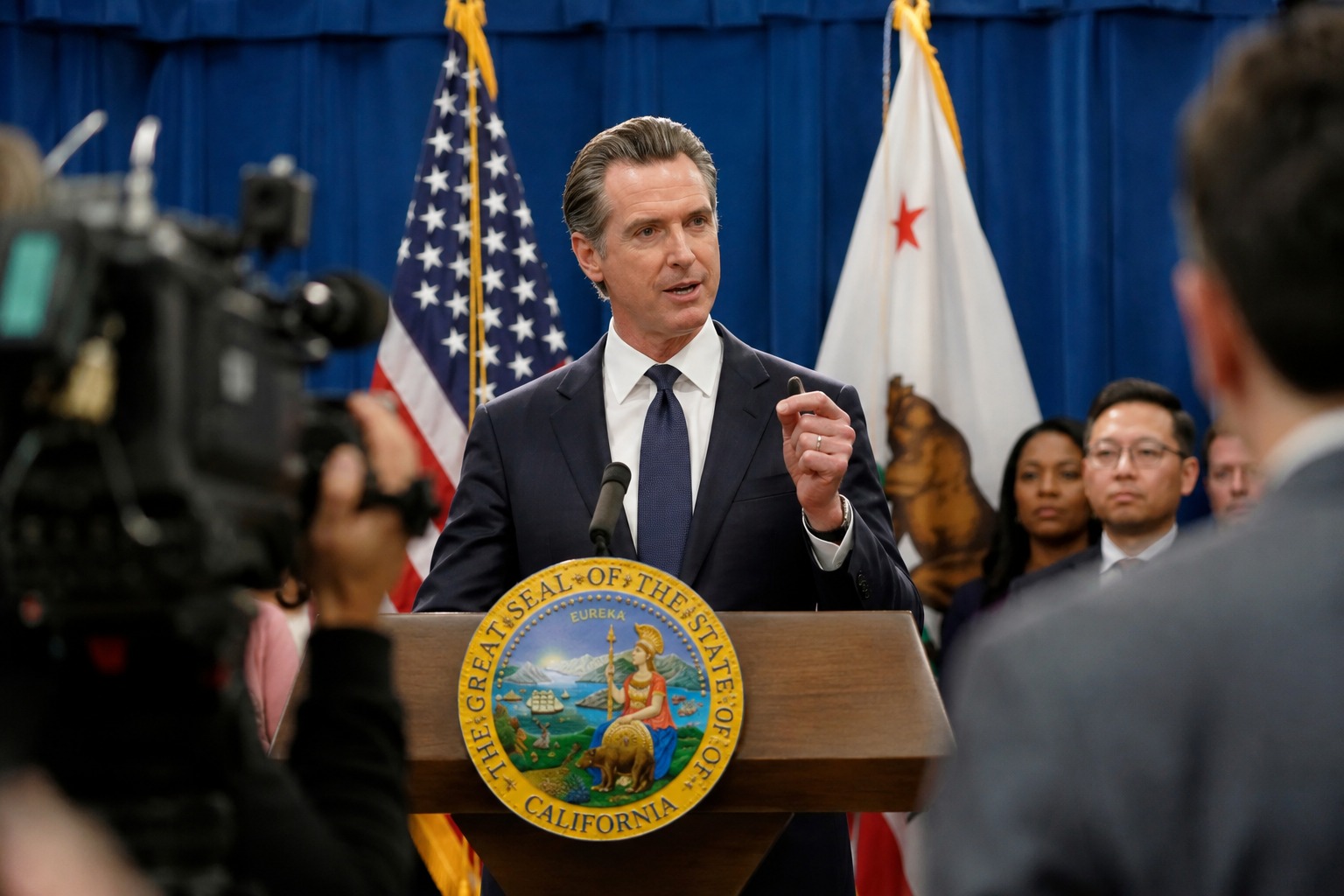
California will soon have the highest statewide minimum wage in the country. Governor Gavin Newsom announced that on January 1, 2027, the state’s pay floor will rise to $17.40 an hour — and he used the moment to draw a sharp contrast with Washington and President Donald Trump.
A New National High
The increase is the result of an automatic annual adjustment tied to inflation, a mechanism built into California law that lifts the wage each year as the cost of living climbs. At $17.40, California’s minimum will sit nearly two and a half times higher than the federal minimum of $7.25 an hour — a rate that has not moved since 2009, the longest stretch without a federal increase since the minimum wage was created in 1938.
“For years, Donald Trump and Republicans have blocked efforts to raise the federal minimum wage while handing tax breaks to billionaires and big corporations,” Newsom said in announcing the change. “They think $7.25 an hour is enough. We don’t.” He framed the raise as proof that California “puts working families first.”
What the Increase Means
When Newsom took office, California’s minimum wage stood at $12 an hour. The steady climb since then reflects both scheduled increases and the inflation-indexing formula now driving the rate upward automatically. The new $17.40 figure applies statewide, though a number of California cities already set their local minimums even higher.
For a full-time worker earning the new minimum, the raise translates into a meaningfully larger annual paycheck — a difference supporters say is essential in a state with some of the highest housing and living costs in the nation.
Supporters and Critics
Labor advocates and many Democrats praised the increase as a win for low-wage workers who have struggled to keep pace with rising prices. They argue that a higher wage floor reduces reliance on public assistance and pumps money back into local economies.
Business groups pushed back. Restaurant owners, retailers, and small-business associations warn that higher labor costs can force difficult choices — raising prices, trimming hours, or slowing hiring. The debate over how minimum wage increases affect employment is long-running, and California’s move is likely to reignite it.
The announcement also lands in the middle of an escalating feud between Newsom and Trump, whose clashes have spanned immigration, federal funding, disaster response, and more. By spotlighting the gap between California’s $17.40 and the federal $7.25, Newsom turned a routine wage adjustment into a national political statement.
What This Means for Americans
Minimum wage policy is one of the most direct ways government touches everyday paychecks. Whether you support or oppose a higher floor, California’s decision sharpens a national question: should the federal minimum, frozen for more than 15 years, finally move? With states increasingly setting their own paths, the gap between the highest and lowest wage floors in America keeps widening — and workers, employers, and shoppers all feel the difference.
Stay informed on the stories that matter most. Follow Palmedia News on Facebook and bookmark palmedianews.com for breaking news and analysis.