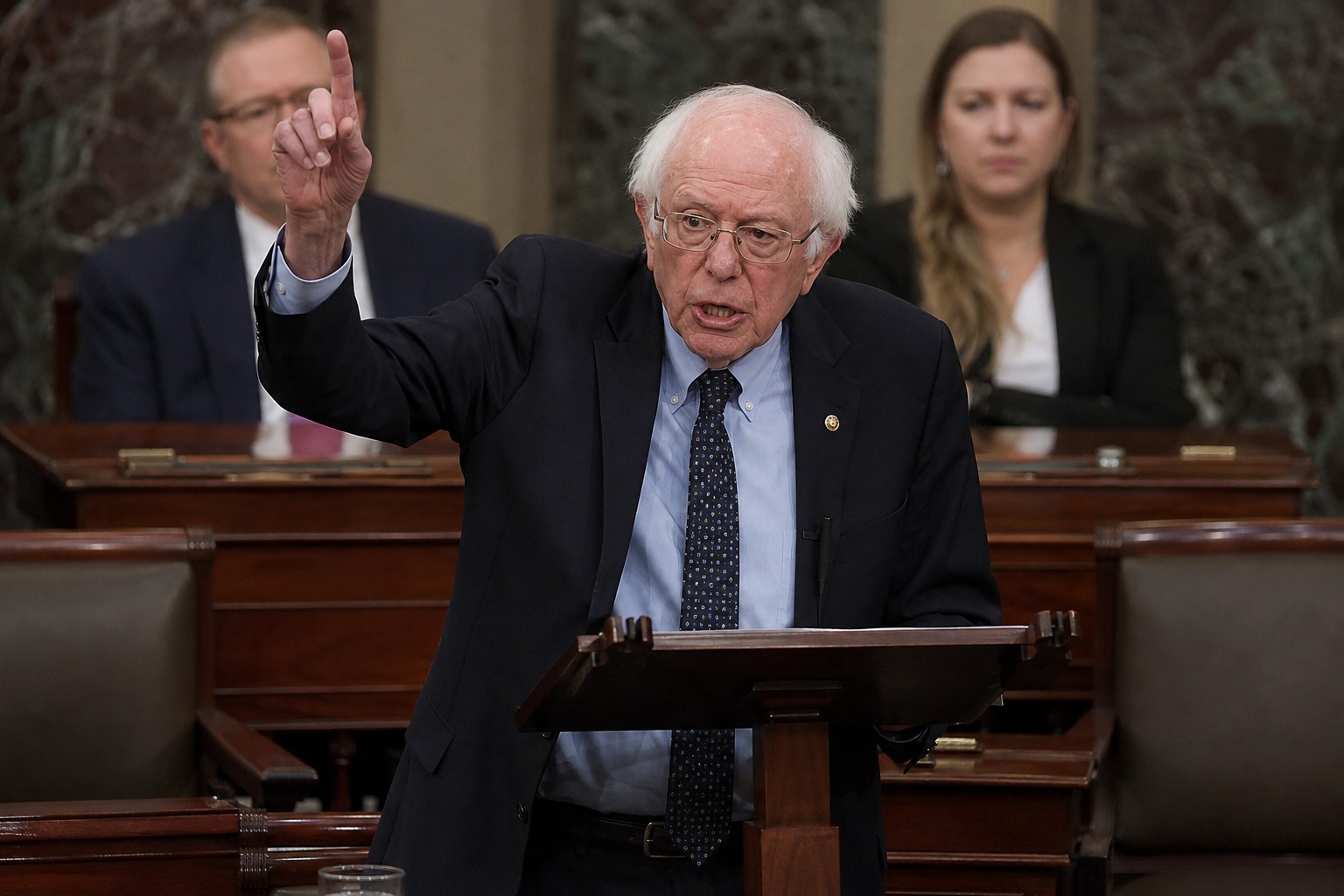
Senator Bernie Sanders has launched another effort to halt the flow of American weapons to Israel, filing Joint Resolutions of Disapproval aimed at blocking nearly $660 million in bomb sales. The Vermont independent forced his Senate colleagues to take a public position on whether U.S. taxpayers should keep financing the munitions being used in the war in Gaza.
The roughly $659 million package covered guided bombs and related equipment. Sanders argued that Americans should not be footing the bill for what he described as Prime Minister Benjamin Netanyahu’s illegal wars, tying his push directly to the humanitarian crisis and reports of starvation unfolding in Gaza.
How a Single Senator Can Force the Vote
Sanders has become one of the most persistent voices in Congress questioning unconditional military support for Israel. His chief instrument is the Arms Export Control Act, a law that lets any senator demand a floor vote on a foreign weapons sale by introducing a resolution of disapproval.
That procedure matters because most arms deals move quietly. Congress is notified, a review window passes, and the sale proceeds without a recorded vote. By filing resolutions of disapproval, Sanders converts a routine transaction into a public roll call, putting every senator on the record either supporting or opposing the transfer.
The Details of the Fight
The resolutions targeted specific shipments of guided bombs and munitions. Sanders framed the debate not as a question of whether Israel has the right to defend itself, but as a question of accountability: whether the United States should continue supplying the specific weapons being dropped in a densely populated territory where civilian casualties and hunger have drawn international alarm.
This was not his first attempt. Sanders has repeatedly brought similar measures to the floor, and each time he has faced a steep uphill climb. Support for Israel remains strong across both parties in the Senate, and previous efforts to condition or block arms sales have fallen well short of a majority.
This round ended the same way. The Senate rejected the measures, allowing the weapons pipeline to Israel to remain open and handing the administration a win on one of the most divisive foreign policy questions on Capitol Hill.
Reactions and Implications
Supporters of Sanders say he is holding the line on both human rights and government spending, forcing a conversation that many lawmakers would prefer to avoid. They argue that a democracy has the right to scrutinize where its weapons go and how they are used.
Critics counter that blocking the sale would weaken a key ally in a volatile region and send the wrong signal to adversaries. They warn that restricting arms could undermine deterrence at a moment of heightened tension across the Middle East.
Even in defeat, Sanders’ resolutions keep the issue alive. Each recorded vote becomes a marker that advocates and constituents can point to, and the margins are watched closely for any sign that sentiment in Congress is shifting.
What This Means for Americans
At its core, this is a debate about how tax dollars are spent and how much say the public gets over foreign military aid. Every weapons package approved abroad represents money and materiel authorized in the name of American citizens, and votes like these determine how directly their representatives are held accountable for those choices.
Stay informed on the stories that matter most. Follow Palmedia News on Facebook and bookmark palmedianews.com for breaking news and analysis.