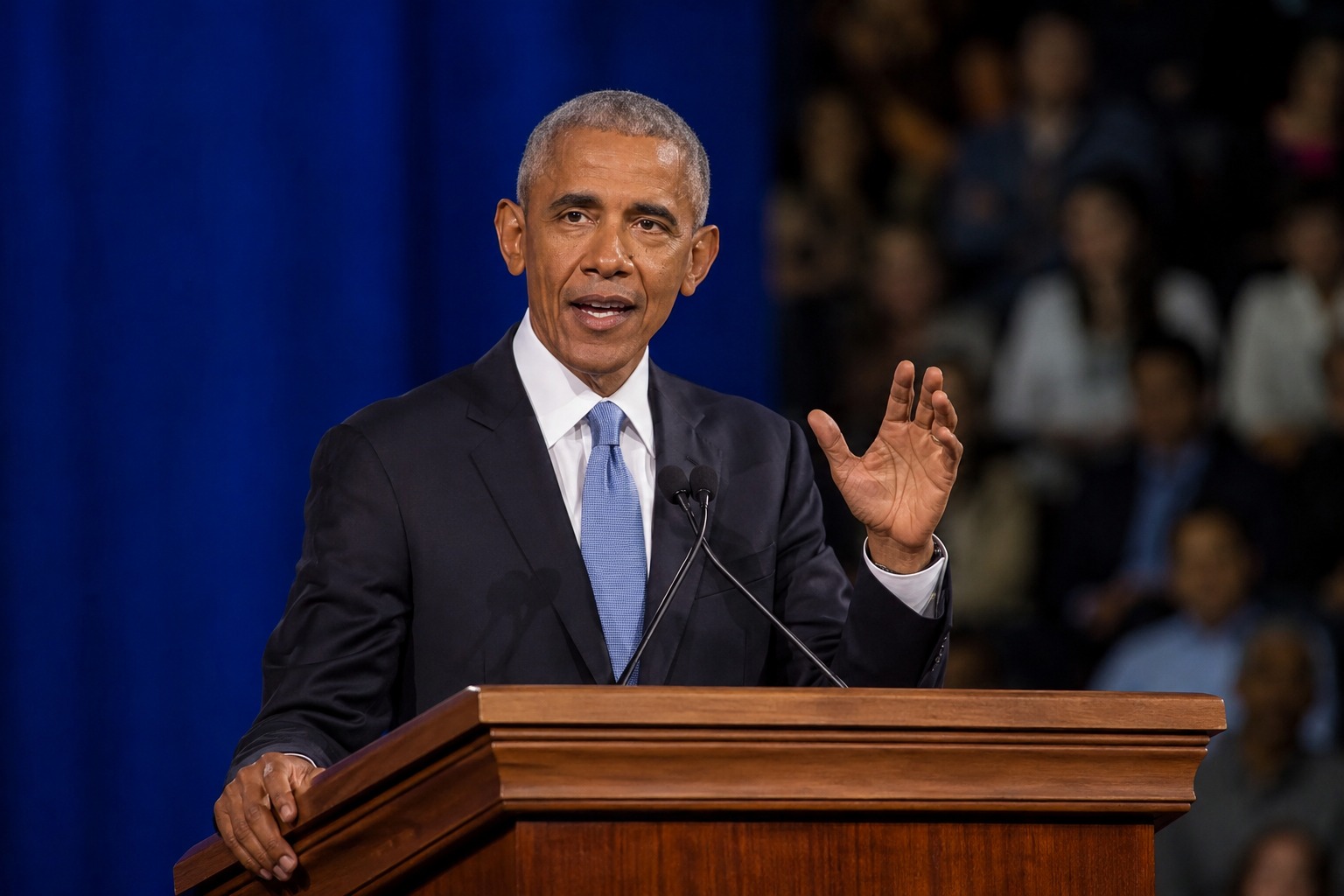
Barack Obama has set off a fresh wave of online debate with a blunt assessment of what he says drives most of the world’s troubles: aging leaders who refuse to let go of power. Speaking during a recent public appearance, the former president put a startling number on the problem — and the clip quickly raced across social media.
“It’s fair to say that 80% of the world’s problems involve old men hanging on who are afraid of death and insignificance, and they won’t let go,” Obama said. “They build pyramids, and they put their names on everything. They get very anxious about it.”
A Line That Traveled Fast
Within hours, the remark had been clipped, captioned and reshared millions of times. For supporters, it was classic Obama — a wry, quotable observation about ego, legacy and the human urge to cling to relevance. For others, it read as a pointed jab, and the guessing game over which specific leaders he might have had in mind began almost immediately.
Obama did not name anyone. That ambiguity is part of what gave the comment its reach: without a named target, listeners were free to map the line onto whichever powerful figure they already had in mind. A remark aimed at no one in particular ended up feeling aimed at everyone.
Not the First Time
This is a theme Obama has returned to before. In 2019, speaking to a gathering of young leaders in Singapore, he argued that a striking share of the world’s problems could be traced to “old people, usually old men, not getting out of the way.” He framed it then as an argument for handing responsibility to a rising generation.
The newer version sharpens that older point. Where the 2019 comment was a general observation about generational change, the latest framing adds a specific figure — 80% — and a harder edge, tying the reluctance to step aside directly to a fear of death and a fear of being forgotten.
The Reaction
Online, the response split along familiar lines. Some praised the comment as a candid diagnosis of how power actually works — that those who hold it rarely surrender it willingly, and often dress up self-interest as duty. Others pushed back, noting that Obama himself remains an influential public figure years after leaving office, and asked whether the observation applied to his own generation of politicians as much as anyone else’s.
That tension — a former leader critiquing leaders who won’t let go — is exactly why the quote resonated. It invited people to argue not just about the world’s problems, but about who gets to name them.
Why It Struck a Nerve
Debates over the age of the people running governments and institutions have grown louder in recent years, on both sides of the political spectrum. Questions about when leaders should step back, how power should transfer between generations, and whether long-serving officials stay too long have become a recurring feature of public life. Obama’s comment landed squarely in the middle of that conversation.
For everyday readers, the appeal is simple. The idea that ego and fear can shape decisions made at the highest levels of power is easy to grasp — and easy to see reflected in workplaces, families and institutions far removed from world capitals.
Stay informed on the stories that matter most. Follow Palmedia News on Facebook and bookmark palmedianews.com for breaking news and analysis.