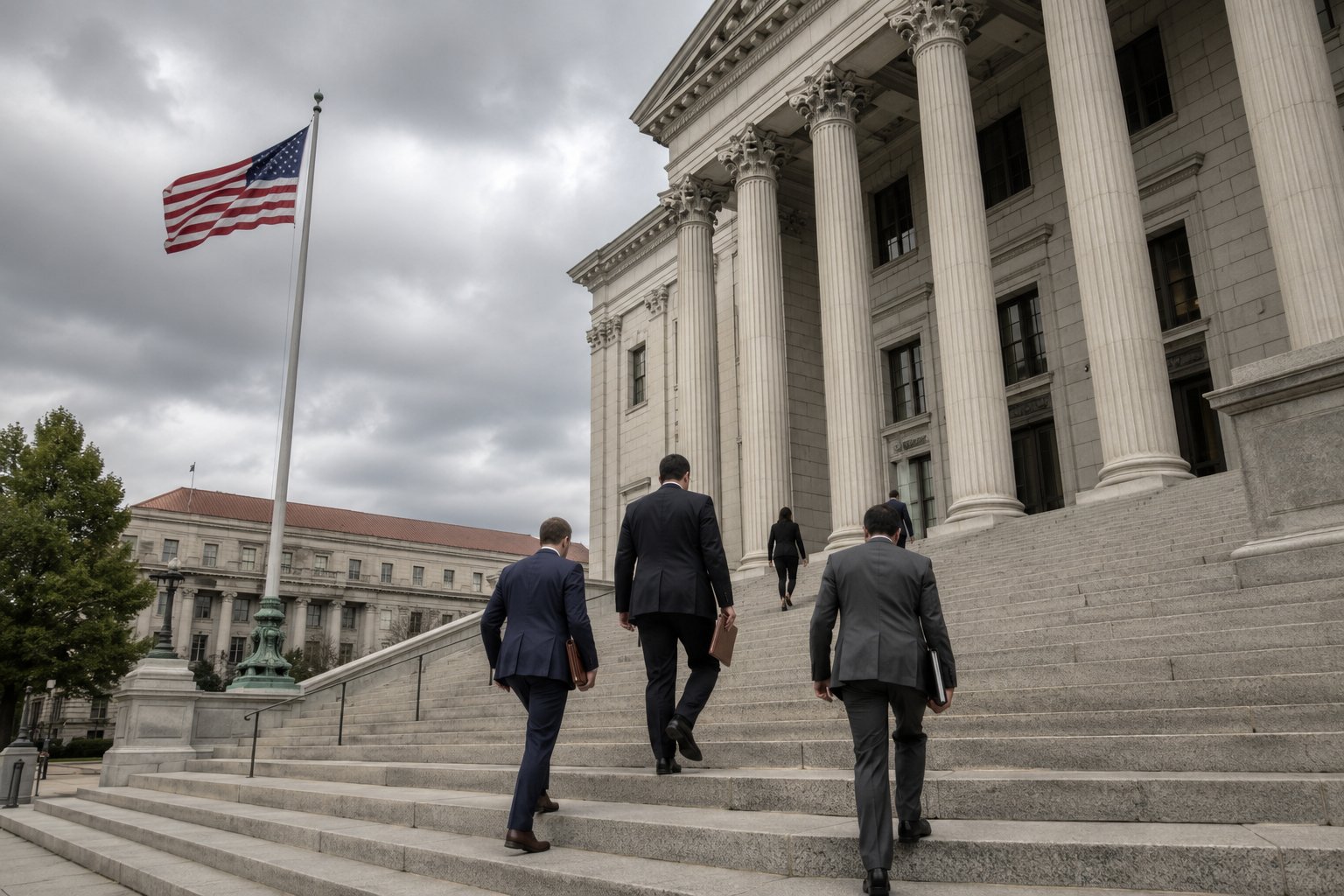
A federal appeals court has dealt a significant blow to one of the Trump administration’s most aggressive efforts to reshape how Americans vote. On July 25, 2026, the U.S. First Circuit Court of Appeals ruled that President Donald Trump cannot — at least for now — enforce his executive order overhauling the rules for mail-in voting, leaving the policy frozen as the legal battle continues.
The 2-1 decision keeps in place a lower-court order issued by U.S. District Judge Indira Talwani in June, which blocked the administration from implementing the sweeping directive. The ruling means the order remains unenforceable in 23 states and the District of Columbia, all of which had challenged it in court.
What the Executive Order Tried to Do
Trump signed the executive order in March 2025, framing it as a measure to strengthen the security and integrity of American elections. The order reached deep into an area that has traditionally been left to state and local officials: the administration of elections.
Among its provisions, the order directed the U.S. Postal Service to take control over the design of state mail-in ballots, requiring specific Intelligent Mail barcodes and standardized logos on ballot envelopes. It also instructed states to hand over unredacted voter registration lists to the Department of Homeland Security so those records could be cross-checked against the federal SAVE database, a system used to verify immigration and citizenship status.
Supporters of the order argued that these steps would help catch fraud and standardize how ballots are tracked and verified. Opponents countered that the federal government was seizing authority the Constitution reserves for the states, and doing so in a way that would be costly and disruptive to carry out.
Why the Court Said No
The appeals court did not mince words. In its opinion, the panel described the order as representing an “unprecedented” level of involvement by federal officials in how states administer their own elections. The judges found that the directive would impose unconstitutional financial and operational burdens on states, forcing them to overhaul ballot systems and turn over sensitive voter data on the federal government’s timeline.
The decision was not unanimous. Judge Joshua Dunlap, a Trump appointee, dissented in part, signaling that even among the judges there is disagreement over where federal authority ends and state control begins. That split underscores just how contested the underlying legal questions remain.
What Happens Next
For now, Judge Talwani’s original block stays firmly in place, and the Postal Service and Homeland Security cannot move forward with the order’s requirements. The administration is widely expected to keep fighting, and the case could ultimately climb toward the Supreme Court.
The timing raises the stakes. With the 2026 midterm elections approaching, any change to how mail-in ballots are designed, tracked, or verified could ripple across millions of votes. Both sides know that whatever rules are in place this fall could shape the outcome of close races nationwide.
What This Means for Americans
For voters who rely on mail-in ballots — a group that has grown to include tens of millions of Americans across the political spectrum — the ruling means the process stays as it is for the time being. No new envelope requirements, no new federal verification steps, and no changes to how states handle registration data while the courts sort out who has the final say.
At its core, this case is about a single, fundamental question that has divided the country for years: who gets to decide how Americans vote by mail — the individual states, or the White House? For now, the courts have sided with the states.
Stay informed on the stories that matter most. Follow Palmedia News on Facebook and bookmark palmedianews.com for breaking news and analysis.