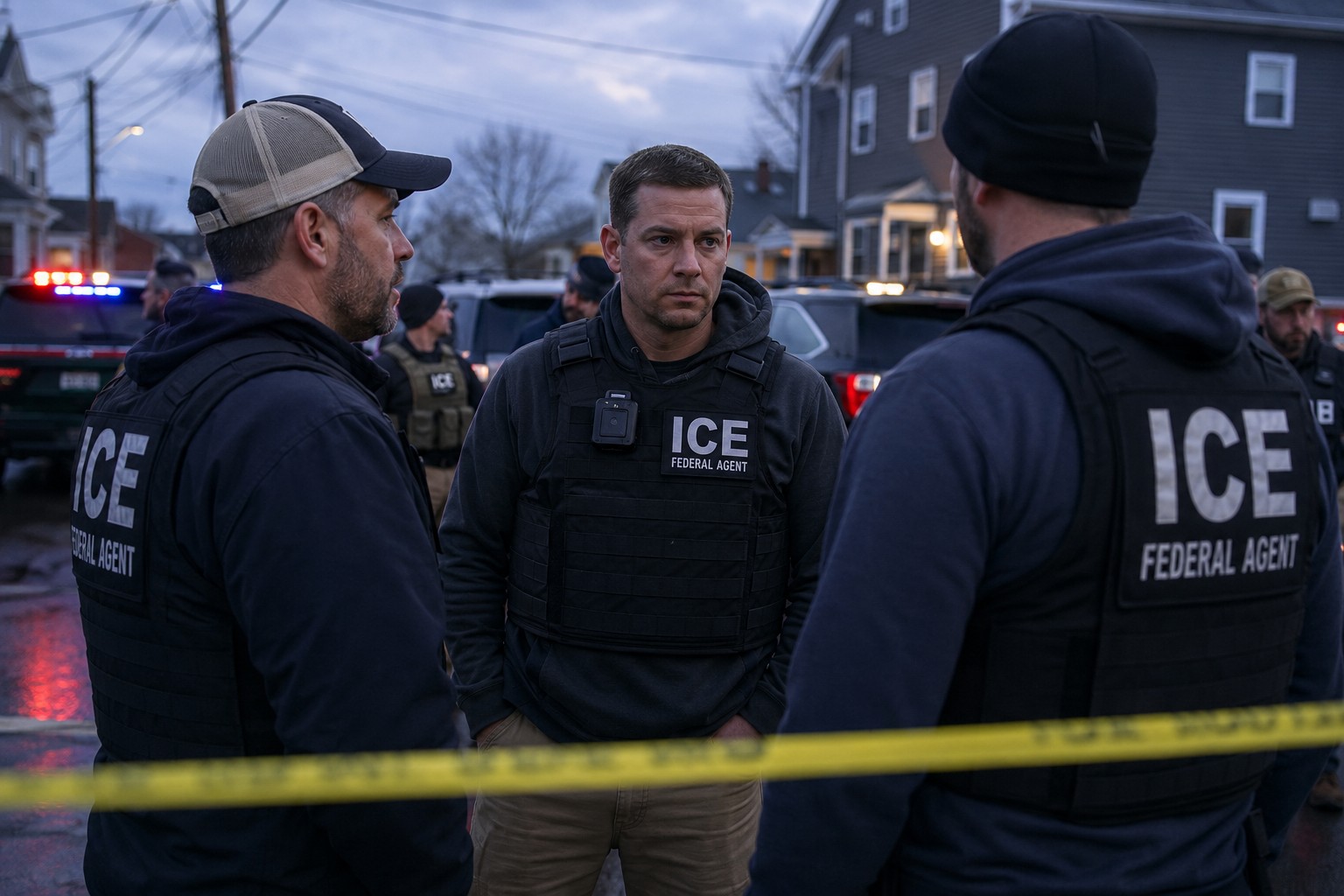
When federal immigration officers opened fire during a deadly operation in Biddeford, Maine, they were wearing body cameras that had been issued to build public trust and accountability. Not a single one of those cameras was recording. A man was killed in the encounter, and there is now no official video record of how the shooting unfolded.
That gap has turned a local tragedy into a national controversy. Lawmakers say the man who died was not even the individual named in the warrant the officers were serving. Without body-camera footage, the public is left with competing accounts and no independent visual evidence of the moment force was used.
A Program Built on the Promise of Accountability
Immigration and Customs Enforcement had announced its body-camera effort months earlier, framing it as a step toward the same transparency standards that many local police departments adopted years ago. The devices were meant to protect both the public and officers by creating a clear record of enforcement actions.
Body cameras only work, however, when they are switched on. In Biddeford, the equipment was present on the officers’ vests but never activated. Officials have not offered a full explanation for why the cameras were dark at the exact moment footage would have mattered most.
What Happened in Biddeford
According to accounts from lawmakers briefed on the incident, federal officers arrived to serve a warrant. During the operation, shots were fired and a man was killed. Members of Congress have said the person who died was not the intended target of the warrant, raising urgent questions about how the situation escalated.
Because none of the officers’ cameras captured the event, investigators and the public must rely on witness statements, physical evidence, and the accounts of the officers involved. In cases where force results in a death, recorded footage is often the single most important piece of evidence for determining what happened. Here, that record simply does not exist.
Congress Demands Answers
The revelation has prompted members of Congress to demand answers about both the agency’s camera policy and the circumstances of the shooting. Critics argue that a body-camera program is meaningless if the cameras are not turned on during high-stakes encounters, and they are pressing for clear rules requiring activation whenever officers carry out enforcement actions.
Supporters of the agency have urged patience, cautioning against drawing conclusions before the full investigation is complete. They note that investigations into use-of-force incidents can take time and that additional evidence may still emerge. Even so, the absence of footage has made it harder for anyone to say with certainty what occurred.
Why It Matters for Americans
For families and communities across the country, the case raises a simple but serious question: if federal officers are given cameras to document their actions, what happens when those cameras are not used? Trust in law enforcement often depends on the ability to review what happened when force is used. When the technology is available but sits idle, that trust is harder to maintain — and accountability becomes far more difficult to achieve.
Stay informed on the stories that matter most. Follow Palmedia News on Facebook and bookmark palmedianews.com for breaking news and analysis.