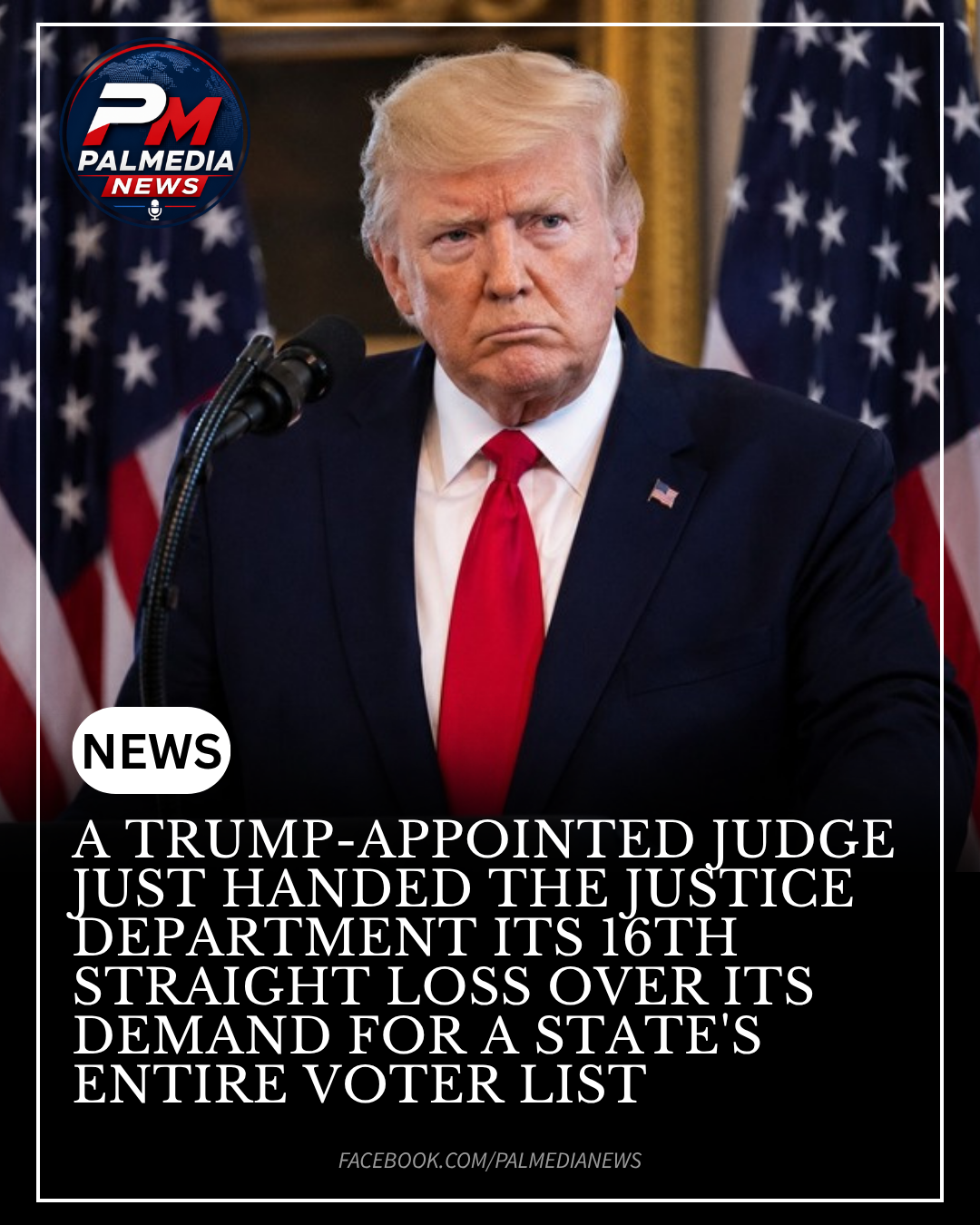
A federal judge in Connecticut has blocked the Justice Department from seizing the state’s complete voter registration list, handing the department its 16th straight courtroom defeat in a nationwide campaign to collect state voter data. The ruling, issued July 17 by U.S. District Judge Kari Dooley, stands out for one reason above all: Dooley was appointed to the federal bench by President Donald Trump.
What the Justice Department Wanted
The department had demanded that Connecticut turn over its entire, unredacted voter registration file — a database that includes not just names and addresses but also driver’s license numbers and partial Social Security numbers for every registered voter in the state. Federal attorneys argued they needed the records to verify the accuracy of the state’s voter rolls.
Connecticut refused, and the dispute landed in front of Judge Dooley. Her answer was unambiguous: the state does not have to comply.
Why the Judge Said No
At the center of the case was a provision of the 1960 Civil Rights Act that requires states to preserve records that “come into” their possession in connection with an election. The Justice Department argued that voter rolls qualify as exactly that kind of record, and that the law therefore entitled the federal government to inspect them.
Judge Dooley rejected that reasoning. Because Connecticut assembles its statewide voter list from data collected by individual municipalities rather than receiving it as an outside document, she ruled, the list does not meet the legal threshold of a record that “comes into” state possession. She also pointed to a practical problem with the government’s interpretation: the same law makes it a crime to alter protected records, which would mean the routine, ongoing maintenance of a voter list — removing people who move or die, updating addresses — could itself become a federal violation.
A 16-Case Losing Streak
The Connecticut decision is not an outlier. It is the 16th time in a row that a court has turned down the Justice Department’s request for a state’s voter files. Similar demands have already been dismissed in states including Virginia, New York, New Hampshire, Maryland, Wisconsin, Maine and Arizona.
“DOJ is now 0-16 in cases to gain access to state voter files,” said voting rights attorney Marc Elias, who has been involved in challenging the demands.
Why the Judge’s Background Matters
What makes the ruling especially striking is who wrote it. A significant share of the department’s losses in these cases have come from judges appointed by Republican presidents, and Dooley, elevated to the bench during Trump’s first term, now joins that list. The pattern undercuts any suggestion that the outcomes are the product of partisan judges; jurists across the ideological spectrum have reached the same conclusion.
Supporters of the data requests say the federal government has a legitimate interest in confirming that state voter rolls are accurate and free of errors. Critics counter that the demands amount to an unprecedented effort to centralize sensitive personal information about millions of voters in Washington, with little explanation of how that data would be stored or used.
What It Means for Voters
For everyday Americans, the case is ultimately about who controls the personal information tied to their vote. A voter registration file contains some of the most sensitive data a person hands to the government, and the courts have now repeatedly signaled that states — not federal prosecutors — remain the gatekeepers of that information unless a much clearer legal basis is established.
Whether the Justice Department keeps pressing these cases, appeals the losses, or changes its approach remains to be seen. For now, the scoreboard reads 0-16.
Stay informed on the stories that matter most. Follow Palmedia News on Facebook and bookmark palmedianews.com for breaking news and analysis.