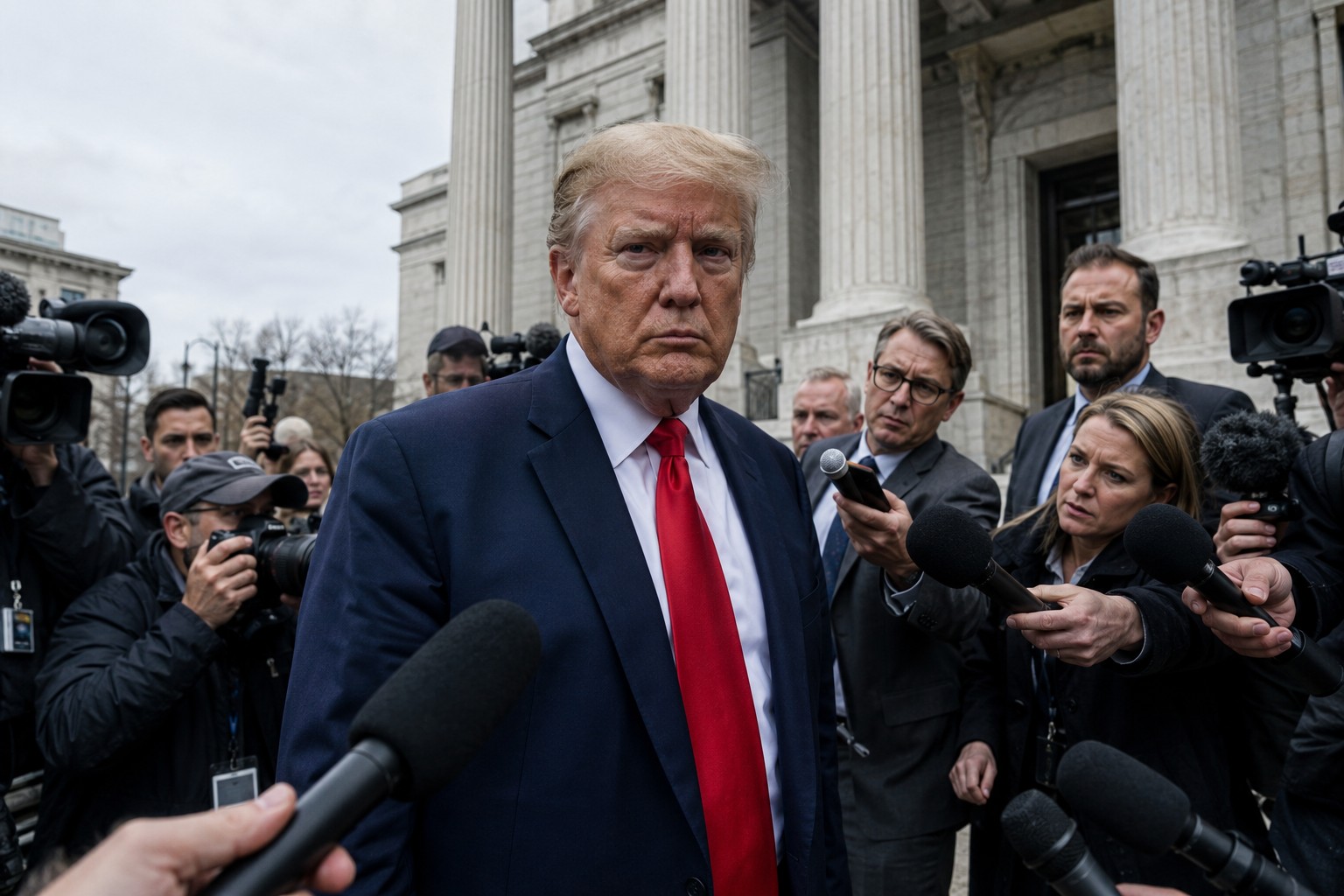
A federal judge has thrown out a $1.776 billion settlement between President Donald Trump and the Internal Revenue Service, ruling that the deal rested on no legitimate legal or factual foundation and that the lawsuit behind it was never a genuine dispute in the first place. U.S. District Judge Kathleen Williams voided the agreement on July 13, 2026, in the Southern District of Florida.
How the Case Reached This Point
The dispute began earlier this year, when Trump and his two sons filed a $10 billion civil suit against the IRS. Their claim: a government contractor had illegally disclosed Trump’s private tax returns, a violation of federal taxpayer-privacy law. Rather than fight for years in court, the two sides reached a settlement in May.
That settlement was extraordinary. It would have created a $1.776 billion “anti-weaponization” fund and permanently barred the IRS from pursuing tax claims against Trump, his sons, and a web of affiliated family companies. In effect, the agency Trump oversees as president agreed to give up its ability to audit or collect from him and his businesses.
What the Judge Found
Judge Williams was blunt. She ruled the case was never a real legal fight because Trump, as president, ultimately controls the very agency he was suing. With the same person effectively standing on both sides of the table, she found there was no genuine adversarial relationship — the hallmark of any legitimate lawsuit. Instead, she described the arrangement as one built to hand the deal the appearance of court approval it could not otherwise earn.
She did not stop at voiding the settlement. Williams referred Trump attorney Alejandro Brito to the Florida Bar for disciplinary action and restricted a second lawyer, Daniel Epstein, from practicing in her district. Sanctions aimed directly at the attorneys who brought a case are rare, and they signaled just how far outside the lines the judge believed the effort had strayed.
The Fallout
The decision wipes out the sweeping tax protections Trump’s family companies stood to gain and reopens questions the settlement was designed to close for good. The nearly $2 billion fund is gone, and the IRS is no longer bound by the promise never to pursue claims against the president’s businesses.
Supporters of Trump argue the underlying issue was real: if a government contractor did leak his tax data, that is a genuine violation that deserved consequences. Critics counter that a sitting president simply cannot sue an agency he controls and then settle with himself for a figure approaching $2 billion, calling the entire maneuver an abuse of the courts. Judge Williams sided emphatically with the second view.
What This Means for Americans
At its core, the ruling is about a basic principle: no one, including a president, is supposed to be both the plaintiff and the defendant in the same case. For ordinary taxpayers who have no power to negotiate away an IRS audit, the outcome is a reminder that the courts can still refuse a deal they view as engineered rather than earned. The legal fight is far from over, and appeals are likely — but for now, the settlement is off the table.
Stay informed on the stories that matter most. Follow Palmedia News on Facebook and bookmark palmedianews.com for breaking news and analysis.