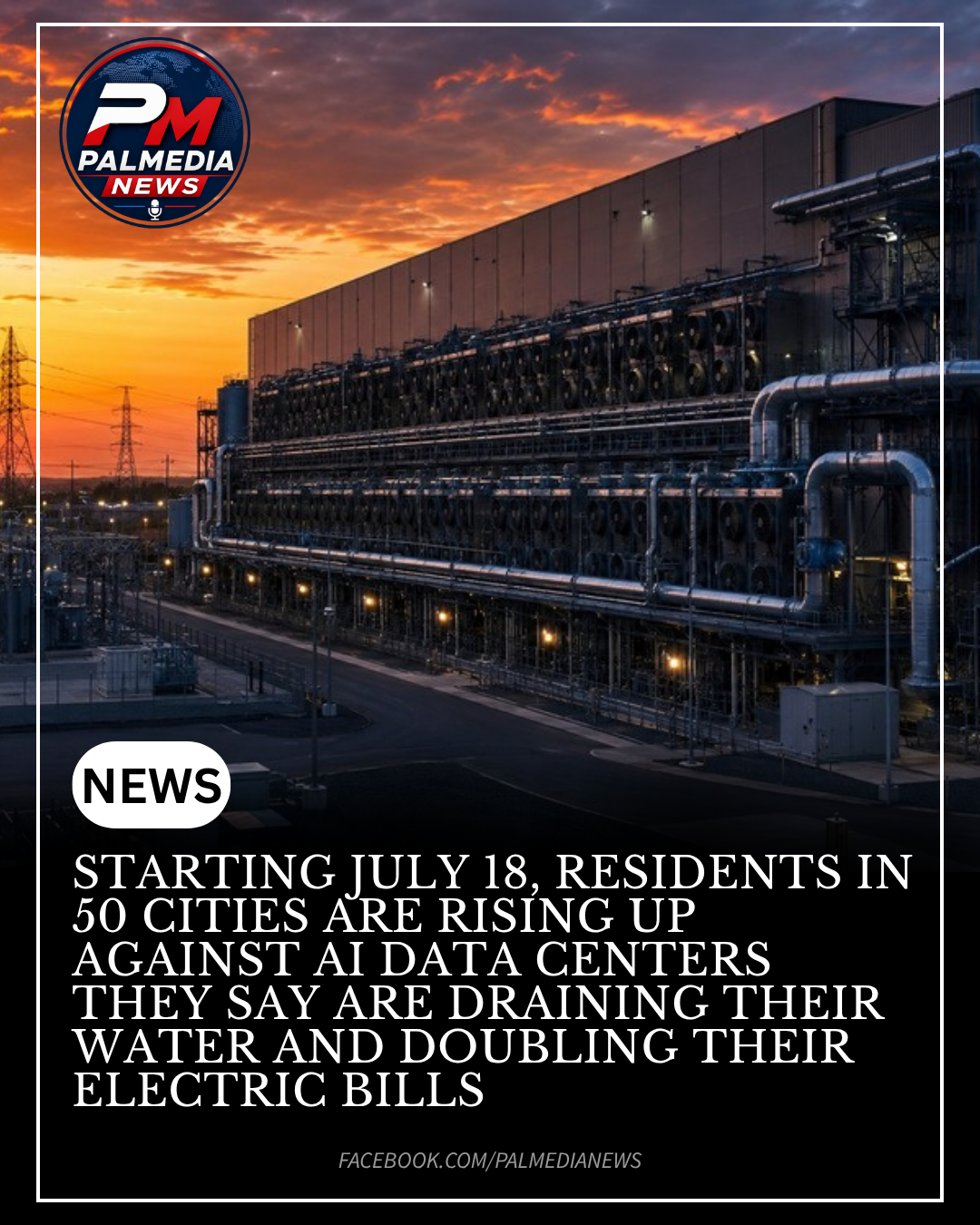
A coordinated wave of protests is set to sweep more than 50 American cities beginning July 18, as residents from coast to coast take a stand against the rapid buildout of AI data centers they say are quietly draining local water supplies and sending their electricity bills soaring. What started as scattered complaints at local zoning meetings has hardened into a national movement.
Organizers are billing July 18 as a day of action, with demonstrations planned outside data center sites and city halls in dozens of communities. The message from the crowds is blunt: the infrastructure powering the artificial intelligence boom is being built in their backyards, and they are the ones paying for it.
Why Data Centers Became a Flashpoint
The facilities at the center of the backlash are the massive server farms that keep artificial intelligence running. Training and operating AI models requires enormous banks of computers that run around the clock, and those machines generate tremendous heat. To keep them from overheating, many data centers rely on water-based cooling systems that can consume millions of gallons a day, along with electricity loads that rival those of small cities.
For years, these buildings went up with little public attention. But as AI demand has exploded, so has the pace of construction, and residents in fast-growing data center corridors say they were never truly consulted about projects that reshape their water tables and power grids.
What Residents Say Is Happening
Two grievances sit at the core of the movement. The first is water. In several communities, residents say local reservoirs and wells are being tapped to cool the servers, straining supplies in areas that were already worried about drought and long-term availability. Photos of shrinking reservoirs near large facilities have become rallying images for the campaign.
The second is the monthly electric bill. Protesters and organizers argue that the staggering power demand from these facilities is pushing up utility rates for everyone on the grid, with some households claiming their bills have nearly doubled since the centers arrived. They contend that ordinary ratepayers are effectively subsidizing the energy appetite of the tech industry.
The Industry Pushes Back
Technology companies and data center developers offer a very different picture. They argue that the facilities bring jobs, capital investment, and tax revenue to the towns that host them, and that AI is a foundational technology that the country cannot afford to fall behind on. Many operators say they are investing in more efficient cooling and in new power sources to reduce their footprint over time.
Industry representatives also point out that data centers often sign long-term agreements with utilities and, in some cases, fund grid upgrades. The dispute now playing out is whether those benefits actually reach the residents who live closest to the servers, or whether the costs land on the community while the profits flow elsewhere.
A Fight Playing Out in Town Halls
The July 18 protests are the loudest expression of a debate that has been simmering in packed municipal meetings for months. Residents have challenged zoning approvals, questioned the tax breaks offered to lure developers, and demanded more transparency about how much water and power each project will use before shovels hit the ground.
For many families, the issue is simple and personal: the water that comes out of the tap and the number at the bottom of the electric bill. As the AI economy races forward, communities in dozens of cities are demanding a seat at the table and a clear answer to one question — who pays the bill for the cloud?
Stay informed on the stories that matter most. Follow Palmedia News on Facebook and bookmark palmedianews.com for breaking news and analysis.