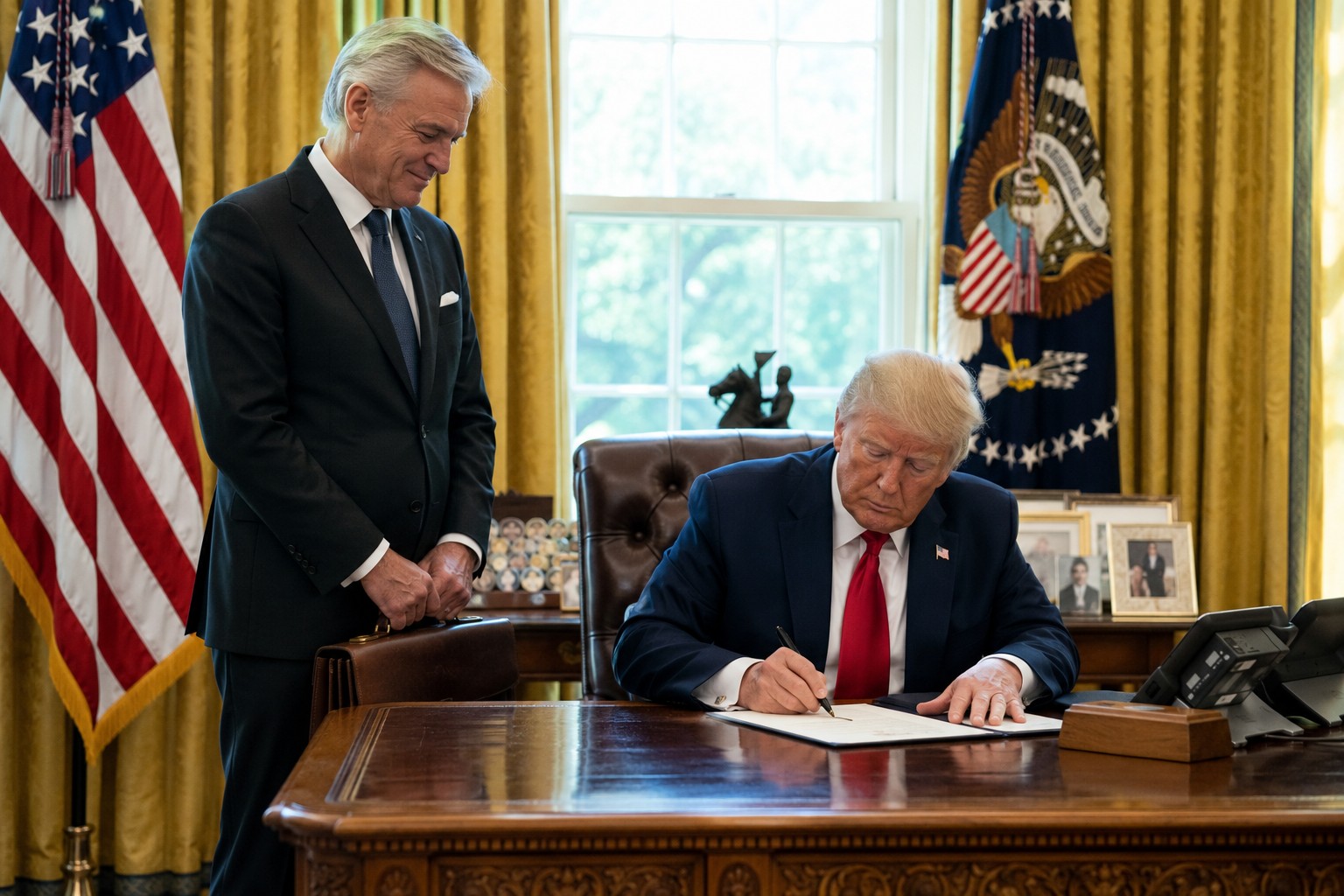
A sweeping anti-corruption bill introduced in the House would make it illegal for a sitting president to accept a single dollar from the people he pardons. The Protecting Our Democracy Act, filed on May 14 by Representatives Jamie Raskin of Maryland, Robert Garcia of California and Joseph Morelle of New York, would bar the president from taking payments from any pardon recipient or presidential appointee, including money routed through a business the president personally owns. Senator Adam Schiff of California has introduced a companion bill in the Senate.
The bill carries 98 cosponsors. It also does something the current law does not clearly do: it makes the payment illegal on both ends, barring the pardon recipient from sending the money in the first place.
The Loophole the Bill Is Built to Close
Here is the part most people get wrong. Paying a president for a pardon is already a crime. That is textbook bribery, and the person handing over the money can be prosecuted for it.
What has never been settled is the other side of the transaction. Can a sitting president actually be charged for accepting that money? The answer has been left deliberately vague for decades. A longstanding Justice Department position holds that a sitting president cannot be criminally prosecuted while in office at all. Layer that on top of the pardon power, which the Constitution grants the president in unusually absolute terms, and you get a gap wide enough to drive a truck through.
The Protecting Our Democracy Act is written to close that gap by naming the conduct directly in statute rather than leaving it to interpretation.
What Else Is in the Package
The pardon-payment ban is one plank of a much larger bill. The package would codify the Constitution’s foreign and domestic emoluments clauses, turning constitutional language that has proven difficult to enforce into enforceable federal law.
It would also require presidential candidates to submit their tax returns to the Federal Election Commission, increase disclosure requirements for online political advertisements, and add protections against foreign interference in American elections.
A separate set of provisions targets the machinery of government itself: more transparency in how the executive branch spends money Congress appropriates, guardrails against the politicization of the civil service, and stronger protections for whistleblowers who expose wrongdoing from inside federal agencies.
Who Is Backing It, and Who Is Not
The bill has drawn endorsements from a long list of watchdog and good-government organizations, including Public Citizen, Citizens for Responsibility and Ethics in Washington, Protect Democracy, the Project On Government Oversight, Common Cause and End Citizens United.
Supporters frame it as a firewall. Their argument is straightforward: if the presidency can be used as a storefront, then every other safeguard in the system is decorative. Garcia has said the bill is meant to make clear that no president can run a pay-to-play scheme from the Oval Office, and that no one should be able to buy a pardon, a cabinet seat, or a favor from the President of the United States.
The objection cuts in the other direction, and it is not a trivial one. Critics argue that Congress has no authority to police the pardon clause at all. The Constitution hands that power to the president with almost no limits attached, and courts have historically been reluctant to narrow it. Under that reading, any statute that touches the pardon power, however well intentioned, would collapse the first time it was challenged.
There is also a hard political reality. No Republicans have signed on. In the current House, that leaves the bill with a steep path and very little chance of reaching a floor vote in its present form.
What This Means for Americans
Strip away the legislative language and the question underneath is simple. Should the most powerful legal mercy in American government be something a person can be rewarded for granting? Most people, asked that plainly, do not need a law degree to answer. The fight in Washington is over whether the answer should be written down in statute, and whether Congress has the power to write it.
Even if this bill never becomes law, it forces a question onto the record that both parties will eventually have to answer, because the pardon power belongs to whoever holds the office next.
Stay informed on the stories that matter most. Follow Palmedia News on Facebook and bookmark palmedianews.com for breaking news and analysis.