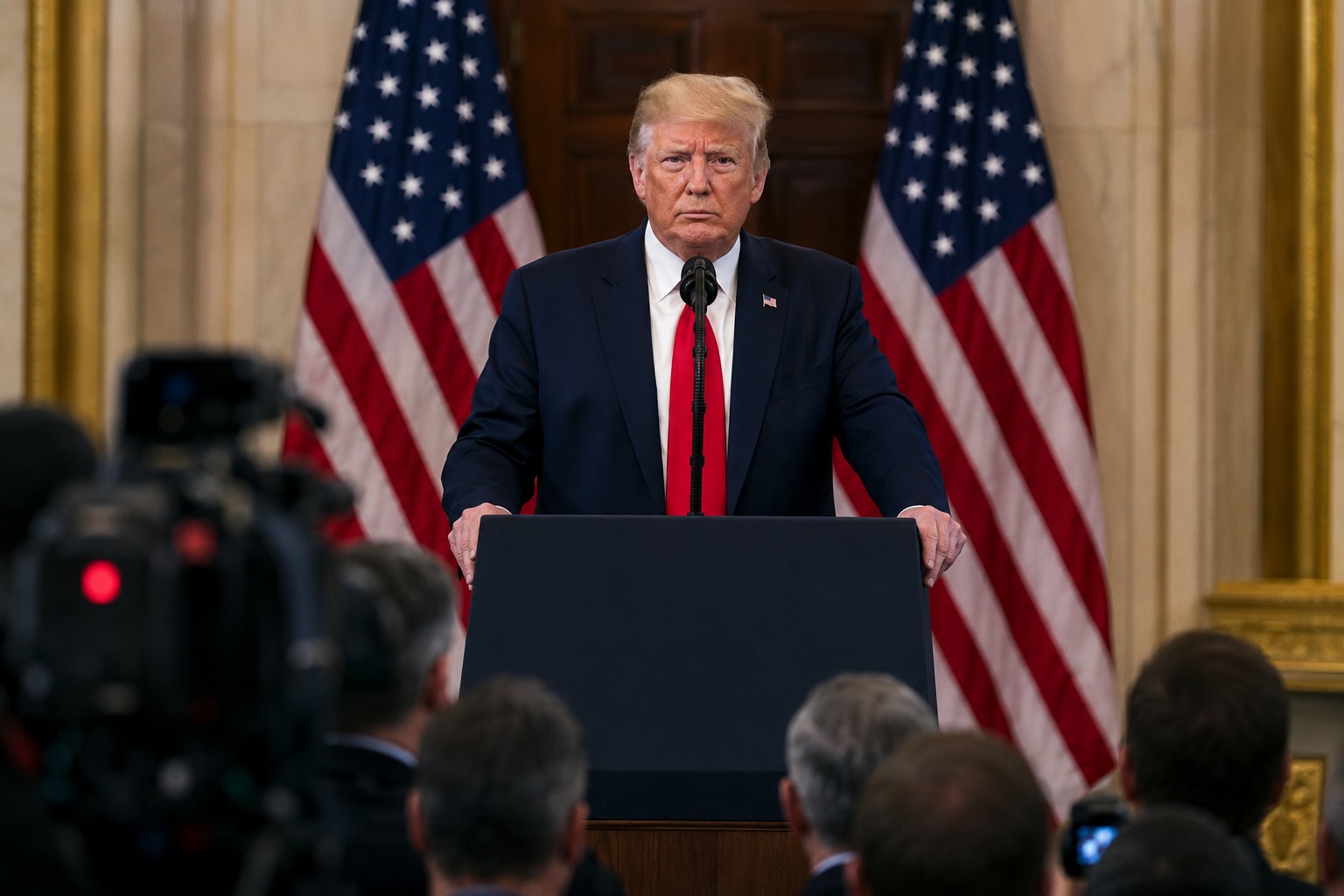
A sitting member of Congress has formally moved to impeach President Donald Trump, introducing a House resolution that lays out 13 separate articles of impeachment for high crimes and misdemeanors. It is one of the most expansive impeachment efforts filed against a sitting president in modern memory.
What the Resolution Says
The measure stacks up 13 articles, tying back to actions surrounding U.S. military intervention. The resolution cites allegations as severe as murder, war crimes, and piracy, framing the president’s conduct as a pattern of abuse rather than a single act. Each article is meant to stand on its own as grounds for removal.
Impeachment resolutions of this kind are not new to the 119th Congress. Several lawmakers have filed articles against the president over the course of the session, ranging from single-charge measures to sweeping multi-article documents. This filing sits at the far end of that spectrum, bundling more than a dozen charges into one resolution.
The Road to Removal Is Steep
Filing articles of impeachment does not, by itself, remove a president. The process is deliberately difficult. For impeachment to advance, a majority of the House of Representatives must vote to approve the articles. That step alone has only happened a handful of times in American history.
Even if the House votes to impeach, removal is a separate and far higher bar. It requires a two-thirds conviction in the Senate — a threshold no president has ever crossed. Andrew Johnson, Bill Clinton, and Donald Trump were all impeached by the House in their respective eras, yet none were convicted and removed by the Senate.
A Fierce National Debate
The math has not cooled the political temperature. The resolution has reignited a fierce national argument over accountability and the limits of presidential power. Supporters of the filing argue the charges are serious enough to demand a formal reckoning, and that Congress has a constitutional duty to act when it believes a president has crossed a line.
Opponents see it differently. They call the resolution a political stunt with no realistic path to passage in a closely divided Congress, arguing it is designed to make a statement rather than to actually remove anyone from office. Both sides agree on one thing: the filing guarantees another round of high-stakes debate on Capitol Hill.
What This Means for Americans
For everyday Americans, the immediate practical effect is limited — no president has ever been removed through impeachment. But these fights shape the national conversation, influence the next election, and test how the branches of government check one another. They are a reminder that the impeachment power, however rarely it succeeds, remains one of the most consequential tools the Constitution hands to Congress.
Stay informed on the stories that matter most. Follow Palmedia News on Facebook and bookmark palmedianews.com for breaking news and analysis.